
The Habit of Art and Being Ourselves – Canon Dr Christopher Collingwood (Chancellor)
Sunday 29 July 2018 – 10am Sung Eucharist
James 1:17-27 Mark 7:1-8, 14-15, 21-23
What, I wonder, are your earliest childhood memories? What’s the first thing you can remember in your life and how old were you?
I have quite vivid memories going back to about the age of three, but one that really sticks in my mind dates from a little later, when I must have been about seven or eight. Most of my early memories have to do with grandparents, and on this particular occasion we were staying with my paternal grandparents in Rugby. I remember going to church one Sunday, as we always did, the building being the sort that’s often referred to as a ‘tin tabernacle’, and I can recall quite clearly the vicar’s sermon. Sitting in the front row were three teenagers, dressed very casually in jeans and open-necked shirts or blouses. The vicar made a point of singling them out as he was preaching, saying that it really didn’t matter what they were wearing; the important thing was that they were there. I’ve very little recollection of anything else he said, but I guess he must have been making a point to those who might have thought that people dressed like that clearly shouldn’t have been allowed to attend a service. This was the sixties, and there was a social revolution, manifesting itself in all sorts of ways, not least in fashion and etiquette. Hitherto people would have worn their ‘Sunday best’ to church, but the vicar seemed to be stating that this wasn’t what really mattered. He didn’t say so in as many words, but what he was suggesting was that it wasn’t the external appearance that mattered, but the intention, the heart.
Does it matter what we wear to church? Do you dress up to come to church or do you come dressed casually? There are plenty of people who just like dressing up and think that church should be something special. Others hate dressing up for anything, and prefer coming to church simply in what they feel comfortable with. Whatever the case, I doubt very much whether any of us would challenge whether this person or that was dressed appropriately. We’d probably argue that this was to miss the point.
Missing the point was the challenge that Jesus made to the Scribes and Pharisees, as we heard in the gospel reading. In this case, it wasn’t about what the correct dress code was, but something of a not entirely dissimilar nature. It had to do with whether certain external ritual actions had to be performed in order to be acceptable to God. The Scribes and Pharisees were unnerved by the fact that Jesus’ disciples didn’t observe the regulations about ritual washing before eating. The charge, in other words, was that they were unclean. Ritual cleansing, however, lay at the heart of the tradition, because it was an outward sign of becoming acceptable to God. The original purpose of things like ritual cleansing was to impress on people the overriding importance of holiness. The problem arises when the sign is taken to replace the reality, when just going through the motions and little more is deemed to be what guarantees holiness. This is what lies at the heart of Jesus’ charge: that there’s more to spirituality than performing the right ritual actions. What matters is what motivates them. When they lose sight of what they’re really for, they just become mechanical and, for this very reason, counter-productive. What matters is the heart.
The problem with obsessing about ritual cleanliness and what’s acceptable to God in terms of the externals is that the attitude that lies behind this can be toxic. It leads to a whole host of binary judgments about who’s in and who’s out, who’s acceptable and who’s not. At the time of Jesus, simply to be sick put you beyond the bounds of social and religious acceptability. This is why Jesus’ behaviour was such an affront to the religious establishment, because he mixed readily with those who were diseased and deemed thereby to be outcast. Time and time again, Jesus recalled people beyond mere external observation to what truly lay at the heart of the tradition, particularly in relation to the prophets.
Nowhere does Jesus actually quote Amos or Micah as he does Isaiah, for example, but he would entirely agree with what they believed God to be saying through them. From Amos: ‘I hate, I despise your festivals, and I take no delight in your solemn festivals. Even though you [make] offerings [to me], I will not accept them. But let justice roll down like waters, and righteousness like an ever-flowing stream’ (Amos 5:21-22, 24). And Micah, ‘With what shall I come before the Lord, and bow myself before God on high? Shall I come before him with burnt offerings, with calves a year old?…He has told you what is good; and what does the Lord require of you but to do justice, and to love kindness, and to walk humbly with your God?’ (Micah 6:6,8). Jesus and the prophets before him affirm that God isn’t concerned with the externals in and for themselves alone, but with what they reveal about who we truly are and what we’re really like. In other words, the externals point to something far more important and less visible: the heart, the very essence, if you like, of who we are. Justice, mercy, kindness, compassion and love, these are things that really matter, because these are what lie at the heart of God and, because we’re created in the image and likeness of God, at the heart of who we are, too. What matters is what comes out of the heart and Jesus suggests that in the end it boils down to love: love God and love your neighbour as yourself. Everything else is simply a gloss on that.
The uncomfortable thing for all of us, of course, is that there’s a disjunction between our outward behaviour and what we profess. To put it another way, our actions reveal our diseased hearts, and this so easily leads to charges of hypocrisy. The charge made by Jesus to the Scribes and Pharisees can be levelled at just about anyone who claims to follow him: ‘You hypocrites. “This people honours me with their lips, but their hearts are from me”’. The Church’s record on child sexual abuse, in particular, makes this charge especially irrefutable in our own day. Even the extraordinarily popular Pope Francis is coming in for a good deal of stick. Having tweeted, ‘Christians aren’t “selling a product” but communicating a lifestyle’, he’s had to change his tweet to ‘communicating life’, because some people were so affronted by what they took to be rank hypocrisy.
We’re all Scribes and Pharisees at heart. Well, that’s only partially true. We certainly don’t live in accordance with who we truly are, but our true nature isn’t corrupted and diseased, it’s actually pure and wholesome. As the great 20th century monk and mystic, Thomas Merton, affirmed, at our very core, we’re untouched by sin; there’s a part of us which is untouched by anything but God. The purpose of all our religious observance is simply to enable us to access this hidden ground of who we are, the heart, and discover it to be none other than love and compassion. As Jesus indicated to the Scribes and Pharisees, true religion is of the heart or it’s nothing. If there’s any real point to the whole paraphernalia of religion, it’s to enable God to facilitate the transformation of our hearts, so that renewed and restored, they finally beat in harmony with God’s own heart of love.
Religion of the Heart – Canon Dr Christopher Collingwood (Chancellor)
Sunday 29 July 2018 – 10am Sung Eucharist
Canon Dr Christopher Collingwood (Chancellor)
James 1:17-27 Mark 7:1-8, 14-15, 21-23
What, I wonder, are your earliest childhood memories? What’s the first thing you can remember in your life and how old were you?
I have quite vivid memories going back to about the age of three, but one that really sticks in my mind dates from a little later, when I must have been about seven or eight. Most of my early memories have to do with grandparents, and on this particular occasion we were staying with my paternal grandparents in Rugby. I remember going to church one Sunday, as we always did, the building being the sort that’s often referred to as a ‘tin tabernacle’, and I can recall quite clearly the vicar’s sermon. Sitting in the front row were three teenagers, dressed very casually in jeans and open-necked shirts or blouses. The vicar made a point of singling them out as he was preaching, saying that it really didn’t matter what they were wearing; the important thing was that they were there. I’ve very little recollection of anything else he said, but I guess he must have been making a point to those who might have thought that people dressed like that clearly shouldn’t have been allowed to attend a service. This was the sixties, and there was a social revolution, manifesting itself in all sorts of ways, not least in fashion and etiquette. Hitherto people would have worn their ‘Sunday best’ to church, but the vicar seemed to be stating that this wasn’t what really mattered. He didn’t say so in as many words, but what he was suggesting was that it wasn’t the external appearance that mattered, but the intention, the heart.
Does it matter what we wear to church? Do you dress up to come to church or do you come dressed casually? There are plenty of people who just like dressing up and think that church should be something special. Others hate dressing up for anything, and prefer coming to church simply in what they feel comfortable with. Whatever the case, I doubt very much whether any of us would challenge whether this person or that was dressed appropriately. We’d probably argue that this was to miss the point.
Missing the point was the challenge that Jesus made to the Scribes and Pharisees, as we heard in the gospel reading. In this case, it wasn’t about what the correct dress code was, but something of a not entirely dissimilar nature. It had to do with whether certain external ritual actions had to be performed in order to be acceptable to God. The Scribes and Pharisees were unnerved by the fact that Jesus’ disciples didn’t observe the regulations about ritual washing before eating. The charge, in other words, was that they were unclean. Ritual cleansing, however, lay at the heart of the tradition, because it was an outward sign of becoming acceptable to God. The original purpose of things like ritual cleansing was to impress on people the overriding importance of holiness. The problem arises when the sign is taken to replace the reality, when just going through the motions and little more is deemed to be what guarantees holiness. This is what lies at the heart of Jesus’ charge: that there’s more to spirituality than performing the right ritual actions. What matters is what motivates them. When they lose sight of what they’re really for, they just become mechanical and, for this very reason, counter-productive. What matters is the heart.
The problem with obsessing about ritual cleanliness and what’s acceptable to God in terms of the externals is that the attitude that lies behind this can be toxic. It leads to a whole host of binary judgments about who’s in and who’s out, who’s acceptable and who’s not. At the time of Jesus, simply to be sick put you beyond the bounds of social and religious acceptability. This is why Jesus’ behaviour was such an affront to the religious establishment, because he mixed readily with those who were diseased and deemed thereby to be outcast. Time and time again, Jesus recalled people beyond mere external observation to what truly lay at the heart of the tradition, particularly in relation to the prophets.
Nowhere does Jesus actually quote Amos or Micah as he does Isaiah, for example, but he would entirely agree with what they believed God to be saying through them. From Amos: ‘I hate, I despise your festivals, and I take no delight in your solemn festivals. Even though you [make] offerings [to me], I will not accept them. But let justice roll down like waters, and righteousness like an ever-flowing stream’ (Amos 5:21-22, 24). And Micah, ‘With what shall I come before the Lord, and bow myself before God on high? Shall I come before him with burnt offerings, with calves a year old?…He has told you what is good; and what does the Lord require of you but to do justice, and to love kindness, and to walk humbly with your God?’ (Micah 6:6,8). Jesus and the prophets before him affirm that God isn’t concerned with the externals in and for themselves alone, but with what they reveal about who we truly are and what we’re really like. In other words, the externals point to something far more important and less visible: the heart, the very essence, if you like, of who we are. Justice, mercy, kindness, compassion and love, these are things that really matter, because these are what lie at the heart of God and, because we’re created in the image and likeness of God, at the heart of who we are, too. What matters is what comes out of the heart and Jesus suggests that in the end it boils down to love: love God and love your neighbour as yourself. Everything else is simply a gloss on that.
The uncomfortable thing for all of us, of course, is that there’s a disjunction between our outward behaviour and what we profess. To put it another way, our actions reveal our diseased hearts, and this so easily leads to charges of hypocrisy. The charge made by Jesus to the Scribes and Pharisees can be levelled at just about anyone who claims to follow him: ‘You hypocrites. “This people honours me with their lips, but their hearts are from me”’. The Church’s record on child sexual abuse, in particular, makes this charge especially irrefutable in our own day. Even the extraordinarily popular Pope Francis is coming in for a good deal of stick. Having tweeted, ‘Christians aren’t “selling a product” but communicating a lifestyle’, he’s had to change his tweet to ‘communicating life’, because some people were so affronted by what they took to be rank hypocrisy.
We’re all Scribes and Pharisees at heart. Well, that’s only partially true. We certainly don’t live in accordance with who we truly are, but our true nature isn’t corrupted and diseased, it’s actually pure and wholesome. As the great 20th century monk and mystic, Thomas Merton, affirmed, at our very core, we’re untouched by sin; there’s a part of us which is untouched by anything but God. The purpose of all our religious observance is simply to enable us to access this hidden ground of who we are, the heart, and discover it to be none other than love and compassion. As Jesus indicated to the Scribes and Pharisees, true religion is of the heart or it’s nothing. If there’s any real point to the whole paraphernalia of religion, it’s to enable God to facilitate the transformation of our hearts, so that renewed and restored, they finally beat in harmony with God’s own heart of love.
Size Matters! – Canon Dr Christopher Collingwood (Chancellor)
Sunday 26 August 2018 – 11.30am Matins
Canon Dr Christopher Collingwood (Chancellor)
Jonah 2 Revelation 1
Size matters. If you’ve heard that phrase before, you might well be quietly sniggering to yourself just a little, since those two words are likely to trigger visions of the male anatomy in your imagination – or, indeed, in your memory! Does size matter? Well, actually, I want to say yes, but not primarily with reference to the male sexual organs. The question of size arises in all sorts of contexts.
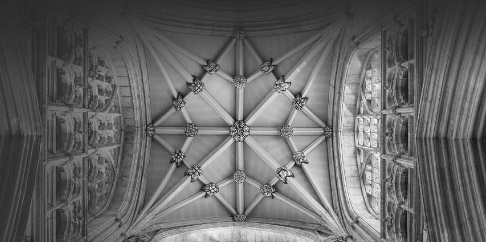
Take York Minster, for example. What effect does its size have on you? Those of us who live and work here often hear of the ‘wow factor’ people experience as they come through the West doors, and that’s partly the impact of the building’s size. The sheer scale impresses us with the ambition of its conception and execution. Built ostensibly to the glory of God, it conveys by its size something of the awesome immensity and transcendence of God. Its size is directly related to the experience of God it’s intended to evoke. At the same time, though, its size was also intended by those who conceived its design to speak not just of God but of political authority. With Church and state working hand-in-glove in the medieval period, the scale of the building was intended to send a subliminal message about political power and control. ‘We’re too big and strong for you to mess with us’, was the signal. The tiny little wooden shack built as the first Minster for the baptism of King Edwin in 627 wouldn’t have had quite the same force. So size does matter.
This isn’t to say that bigger is always better, though; it’s a question of proportion. It doesn’t follow, for example, that taller human beings are necessarily better than shorter ones, or that bees are less important than beetles in the natural world because they tend to be smaller. Bees might be relatively small in size but their role in terms of pollination is colossal. And while we’re about it, what about sermons? I’ve yet to find anyone who argues the longer the sermon the better. It’s usually the reverse – so I’ll keep that in mind!
The question of size arises directly in relation to something like the book of Jonah. I received notification two years ago that a collection of short stories entitled, That Glimpse of Truth: 100 of the Finest Short Stories Ever Written, was due to be published in 2017. It so happens that the book of Jonah appears as the first story in the collection. The stories were assembled by David Miller, who acknowledges that the very notion of the finest 100 short stories is simply outrageous. The finest says who? By what criteria? Miller explained that he wanted to choose stories that reflected as many genres, moods and voices as possible, readily acknowledging that his choices would inevitably be contested. What’s of note, though, is that the book of Jonah appears in such an anthology at all. Depending on precisely how you measure it, the only book in the Old Testament that’s shorter than Jonah is Obadiah, so Jonah undoubtedly qualifies as a short story in terms of size. In most editions of the Bible it’s less than two pages long. In terms of size, though, the significant thing about it is the sheer size of its spiritual and theological impact, which seems to be in inverse proportion to the number of words to be found in it.
If you’re at all familiar with the story, you’ll probably be aware of the role of the whale, the big fish, about which we heard in the first lesson. Despite the brevity of the story, its impact was sufficient to cause Jesus himself to refer to it in the gospels, and indeed the image of Jonah inside the whale, and his eventual emergence from it, is often seen as a type of death and resurrection, which itself is so central to the whole Christian story.
The story of Jonah’s primarily about human small-mindedness compared to the vast and limitless nature of God’s love and compassion. Jonah’s called by God to go to the people of Nineveh to draw attention to the wickedness in that city, not to rub the people’s noses in it, but to convey to them the compassion and concern of God for them, who wants to give them a chance to change. Jonah resents the fact that God’s care is broader than he himself feels comfortable with, so he sets off in the opposite direction. While on board ship, though, a storm arises and the sailors assume that Jonah’s jinxed them. He tells them that they’ll just have to throw him overboard but, pagan, though they are, they try to get him ashore first, thus showing more concern for Jonah’s welfare than Jonah did for the people of Nineveh. Seeing that they’re unable to achieve their objective, Jonah’s thrown into the sea and gets swallowed by the fish, not as a punishment but as a mark of God’s desire to save him. After three days he’s spewed out of the fish’s belly onto dry land.
Reluctantly, Jonah proceeds to Nineveh, bitterly resentful of God’s desire to save them. When Jonah sees that the Ninevites heed his message, Jonah’s angry, and with heavy irony denounces God for God’s compassion and mercy to those whom Jonah deems to be undeserving of it. Jonah’s almost a prototype of the Prodigal Son’s elder brother, who just can’t bring himself to rejoice in his younger brother’s return home to be reconciled with his father after messing up his life. Both stories are at pains to communicate something of the magnitude of God’s love, and in so doing convict us of our small-mindedness. The message of the story of Jonah is quite simply: your God is too small – the title of a book by the 20th century New Testament scholar J.B. Phillips.
The story of Jonah’s really a comedy, because Jonah’s just so ridiculous. In Jonah, though, we see ourselves and the ways in which we seek to cut God down to size. By the end of the story, it becomes clear, to quote the words of Frederick Faber, that ‘the love of God is broader than the measure of man’s mind; and the heart of the Eternal is most wonderfully kind,’ compared with the ways ‘we make his love too narrow by false limits of our own.’
We’re called to live with a largeness of heart, not as something alien to us, imposed from the outside, but as who we truly are as created in the image and likeness of God, the God who’s bigger than we can ever conceive and whose love and compassion is so great that it blows our minds wide open.
So, you see, as I told you: size does matter!
Do you believe and trust in God?- the Reverend Canon Michael Smith (Pastor)
The Reverend Canon Michael Smith (Pastor)
Sunday 19 August 2018 – Trinity 12 – Matins
Jonah 1 & 2 Peter 3.14-end
There are many great prophets in the Old Testament. There is Isaiah with his writing about holiness, righteousness and judgment. There is Jeremiah who speaks of judgement and hope. Then there is Hosea who uses his own marriage as an illustration, calling the people to be faithful to God. Then there is Amos who speaks about social justice and warns against hypocrisy. There are many other prophets who speak the word of God with courage and clarity. Their lives are often hard but they are faithful in their calling to guide God’s people and to share in God’s work of salvation. There are all these great prophets in the Old Testament …… and then there is Jonah …… as a prophet Jonah could be described today as , ‘a bit rubbish’!
God told Jonah to go to Nineveh and Jonah went to Tarshish, in the opposite direction. On the ship to Tarshish a huge storm blew up and all the sailors were praying hard to their gods. Where is Jonah, the prophet of the one true God? Is he helping the sailors control the boat in the midst of the appalling storm? Is he saying his prayers? No, he is fast asleep in the hold! The sailors work out that the person to blame for the storm is Jonah who has been disobedient to his God. Jonah, showing some remorse, suggests that the way to end the storm is for the sailors to throw him in to the sea. They show compassion and do not immediately do that, they keep rowing hard and battling the storm. So the foreign sailors did what they could to avoid throwing Jonah overboard, but in the end they had to, the storm was so fierce, and immediately the storm ceased and Jonah, who should have drowned, was swallowed by a large fish.
The whole story of Jonah is like this. He is portrayed as a self-centred, disobedient and ineffective prophet while all those around him, mainly foreigners, are seen to be good, compassionate and obedient.
The question screaming from the pages of the story of Jonah is; why is this book, about a prophet who is ‘a bit rubbish’, in the bible at all?
There are many ways of thinking about this. What is important is that almost despite Jonah, good things happen. The sailors encounter the power of the one true God and as a result they offer sacrifices and make vows to the one true God. Because of the great fish Jonah gets a second chance and goes go to the massive city of Nineveh, walks into its centre and preaches the shortest ever sermon, ‘Forty days more and Nineveh will be overthrown’. As a result of this the king of Nineveh orders everyone to repent, which they do, obediently and God does not destroy them all, God’s mind is changed!
Wow, what a great story of redemption – in the end Jonah does the right thing and they all lived happily ever after. But there is another chapter …. Jonah is very displeased that Nineveh is not subject to God’s wrath and so he is very angry with God. Jonah says to God that he fled to Tarshish because he knew what God was like and that the bad people of Nineveh, if he didn’t go to them, would get their just deserts. This is what Jonah says
‘I knew that you are a gracious God and merciful, slow to anger, and abounding in steadfast love, and ready to relent from punishing.’ Jonah 4.2
This is true. We believe it is true and Jonah believed it to be true. The problem is that God is gracious and merciful, slow to anger and abounding in steadfast love, but Jonah isn’t! He is a self-righteous, arrogant man who thinks he knows best.
In the service of baptism one of the questions the parents and godparents are asked is, ‘Do you believe and trust in God the Father, source of all being and life, the one for whom we exist?’ When I am talking with candidates or parents before a baptism I always talk about this question. What is important is that the question is not simply, ‘Do you believe in God the Father’, but ‘Do you believe and trust in God the Father’. Believing in God is one thing, for many it is a philosophical decision. Many people say that they believe in God but it makes no difference to the way they live their lives. The challenege comes when you say that you trust in God. Trusting in God is much more difficult. It is easy to trust in God when looking at a beautiful, healthy new born baby sleeping soundly in a cot, it is more difficult when you turn on the news and hear of some terrible tragedy or a friend rings you up with awful news about a loved one being seriously ill – then, trusting God is much more challenging.
The problem for Jonah was that he believed in God, he even believed in God as being gracious and merciful, abounding in love, but he did not trust that the world would be a better place if God was able to manifest God’s love and mercy to the people of Nineveh. Jonah believed they should suffer for their sins, he didn’t trust that God’s forgiveness and mercy was the right and best course of action for that wayward people.
It is easy for us to condemn Jonah for his lack of trust in God, but, could you walk into a prison and visit a convicted terrorist or a convicted paedophile and tell them that God is gracious and merciful, ‘slow to anger, and abounding in steadfast love, and ready to relent from punishing’, thus opening the door for them to repent and receive God’s mercy and love? Maybe if we felt God calling us to go to speak the good news of God’s love to a notorious criminal, in a prison in Nineveh, we would get on the bus and go shopping or to the cinema in Tarshish instead!
Jonah believed in God, he believed in God’s goodness, but he did not trust in God. The question is, do we believe and trust in God?
Let us pray
Spirit of God, breathe into our hearts peace that is content in your love. Spirit of God, unite us in honouring the gift we are to each other. Spirit of God, give nations common cause to strive for justice and the welfare of all people. Spirit of God, fill us with your grace to trust in your promises and accept your forgiveness for ourselves and others. Spirit of God, breathe into the whole of your creation the peace that comes from you alone through Jesus Christ. Amen
Living in the Now. – the Reverend Canon Michael Smith (Pastor)
The Reverend Canon Michael Smith (Pastor)
Sunday 12 August – 11th Sunday after Trinity – Matins
Song of Solomon 8.5-7 & 2 Peter 3.8-13
‘But do not ignore this one fact, beloved, that with the Lord one day is like a thousand years, and a thousand years are like one day.’ 2 Peter 3.8
Tom Hazard is a history teacher in a tough London secondary school. He is teaching a lesson, to a class full of disinterested and surly teenagers, about the witch trials of 16th century and struggling, not just with the surly teenagers, but with flashbacks. Tom Hazard looks middle aged but is over 400 years old and he saw his mother executed as a witch because she had a son who was not aging normally. This scenario is taken from a novel I am reading at the moment called ‘How to stop time’ by Matt Haig. The basic premise of the story is that Tom Hazard, the hero, has a physical condition which means that after relatively normal ageing in the first years of life he begins to age very slowly, he ages 1 year for a normal person’s 13 or 14 years.
I thought of this story when I read the opening verse of chapter 3 of Peter’s second letter, ‘But do not ignore this one fact, beloved, that with the Lord one day is like a thousand years, and a thousand years are like one day’, because the most interesting thing about the novel I am reading is that living for over 400 hundred years rather than the usual human life span, gives a very different perspective on life and on human problems. I began to wonder if that is the point that Peter is making in his letter. Is what he says about a thousand years being like a day to God, really challenging us to think again and to think in new ways about the problems and challenges we face in life.
There is a strange contradiction running through chapter 3 of Peter’s second letter, at times he seems to be saying that one day is like a thousand years to God and later he says that the day of the Lord will come like a thief, and the end of the age as we know it is imminent.
Perhaps what this passage is telling us is that we should not allow our lives, and our sense of what is significant and important, be dominated by our perception of time. The things that are really important are those things that are not bound by or dependent upon time – love, grace, generosity, compassion – these are things that are truly important.
I wonder if what Peter had in the back of his mind as he wrote this letter was what Jesus said in the Sermon on the Mount. In Matthew 6 Jesus calls on those listening to him on the mountainside, not to worry about food and drink and clothing, pointing to the birds of the air and the lilies of the field who do not worry but survive, thrive and are beautiful. At the end of Chapter 6 Jesus says, ‘strive first for the kingdom of God and his righteousness’. The things of the Kingdom, love, peace, justice, joy are not bound by or dependent upon time, they are not things for which we can or should set a timetable, but we do …. ‘I will start being more loving to my family and friends when I have built my career’. ‘We will build a kind of peace built on fear and get round to building peace based on mutual respect and trust later’. ‘When we get rid of this tyrannical leader by any means, then we will start working for justice’. ‘I am looking forward to finding some real joy in my life, when I retire’. Individuals and nations have a tendency to put things off, to dodge doing hard things – I know some of the things I have just said resonate alarmingly with me.
I am a little uncomfortable with all the language we have in our liturgy about eternity and eternal life. People sometimes tell me that the idea of anything being eternal, even playing a beautiful harp on a nice fluffy cloud, is not particularly attractive. I think we have to sit a little more lightly to time, linear time and the things of time. God is above and beyond time – with God there is just now – God’s now. What Peter seems to be saying in his letter and what Jesus seems to be saying in the Sermon on the Mount is, live for the day, leave the thousand years to God – live for now, not for some imagined future and make sure that you fill now, God’s now, with the things of God; love, peace, justice, joy …… do not put these things off until later ….. one day, today, tomorrow or in a thousand years there will not be a later …. there will only be God, so let us strive for the things of God today …. now.
Let us pray
(The hallowing of time – a prayer by Eric Milner-White, a past Dean of York Minster)
O my God all times are thy times, and every day thy day, made lovely only with thy light. Bring us, O Lord, to that blessed eternal day which thy Son, our saviour hath won for us and to the perfect light.
Blessed be the hour, O Christ, in which thou wast born, and the hour in which thou didst die; Blessed be the dawn of thy rising again, and the high day of thy ascending: O most merciful and mighty redeemer Christ, let all times be the time of our presence with thee, and of thy dwelling with us. In your name. Amen
Feed the World – the Reverend Canon Michael Smith (Pastor)
The Reverend Canon Michael Smith (Pastor)
12 August 2018 – 11th Sunday of Trinity – 10am Choral Eucharist
Ephesians 4.25 – 5.2 & John 6.35,41-51
“I am the bread of life. Whoever comes to me will never be hungry” John 6.35
Whenever I read these words I always think of the poem called ‘Horace’ which begins
Much to his Mum and Dad’s dismay
Horace ate himself one day.
He didn’t stop to say his grace,
He just sat down and ate his face.
The poem continues, cataloguing how Horace slowly consumes himself and it ends ….
And there he lay: a boy no more,
Just a stomach, on the floor…
I have always liked this poem – it is by one of the Monty Python team – not sure which one. In 1 Corinthians 12 Paul identifies the followers of Jesus as “the body of Christ” and there are occasions in services we have when we say “we are the body of Christ”. So, if Jesus is the bread of life, there is a sense in which we should also be, at the least, a crumb, or even a slice, of the bread of life! Thinking of ourselves as food is a very strange idea indeed – but let’s do that and let’s do it in relation to the food we share each week, the Eucharist.
There are four main actions in the Eucharist – Taking, Blessing, Breaking and Sharing. Bread is taken at the Altar, we give thanks for it and bless it, we break the bread and share it. But what is happening at the Eucharist is many layered. On one level we are simply sharing food with people we love. On another level we are entering into and sharing the very life of God. When we come to the Eucharist we do not only bring bread and wine, we bring ourselves and so we can also say that at the Eucharist we offer ourselves to God and God accepts us and takes us, he rejoices in us and blesses us, because we offer our whole selves in vulnerable love, our selfish, self-centred instinct is broken and we leave ready to be offered in vulnerable love to those with whom we share our lives.
Horace’s big mistake is the same mistake that most of us make all the time – he thinks ‘It’s all about me’ – without wishing to get too prosaic and arty about what is essentially a silly little ditty – this poem can be said to reveal something that is essentially true – selfishness is ultimately destructive, selfishness is not only destructive of communities it is also destructive of individuals – people who only think about themselves, who work only to satisfy their own desires can appear to be successful by the world’s standards but ultimately selfishness leads nowhere – ‘just a stomach on the floor’!
I think that many of us come to the Eucharist thinking, subconsciously, that this is all about me – it’s about me being fed by God. It’s about me being sustained. It’s about me, at that moment of communion, connecting with God and feeling loved and held, safe and secure. This is all true, but it is only a part of the story, coming to the Eucharist is not only about receiving, it is also about giving. Giving ourselves to God to be blessed and broken to be given back to the world.
One of my sons as a teenager had a T shirt and it has emblazoned across the front with the words ‘God’s gift’. He wore it with irony (I hope) and with the arrogance of youth. I would like to buy a job lot of those T shirts and give them out as people walk away from the communion rail – sustained by God in the Eucharist we actually do become ‘God’s gift’ to the world. As we have been fed, sustained and blessed around the altar we go out to offer ourselves in unconditional love to the world around us. Not because we are better than anyyone else but simply because we know that we are accepted and loved by God and we are called to share that with everyone we meet.
People like me in pulpits like this say things like ‘You are to be a Eucharistic people’ and generally people like you think, ‘That sounds good, I like that’ ……. but we are not quite sure what it means. Well it doesn’t mean that we are simply a people who choose to worship in a particular way with a ritual based around sharing bread and wine. Let me explain what I mean by saying ‘You are a Eucharistic people.’ When I was training to be a priest I can remember having a long and heated debate (as only students can) about genuflecting. Genuflecting is when you bow on one knee, a sign of respect and honour. The argument was essentially this – when you are in church and you go up for communion you should genuflect because you are approaching the altar and more importantly you are approaching the consecrated bread and wine, the focus of God’s presence, the body and blood of Christ. We all agreed (because I went to that sort of Theological College) that genuflecting on your way to receive communion was the right thing to do. The question was, when you have received communion, should you also genuflect towards the consecrated bread and wine before you walk away? Some said you should while others argued vehemently that you shouldn’t because as you walk away from communion you are carrying the focus of God’s presence within you, you become what you eat – you have received the sustaining food of heaven, you are then ready to go out to be the sustaining food of heaven to everyone you meet, you are a walking tabernacle, you are God’s gift! What I mean by saying that you are a Eucharistic people is that you leave church to feed everyone you meet with God’s love, to develop relationships that are creative and sustaining based on the Kingdom values of justice, compassion, peace and love.
The Eucharist is our central act of worship. It is important that we remember two things;
1. The Eucharist is not just about the bread and wine and the Jesus of history it is also about you and me offering ourselves in vulnerable love to God, to each other and to the world
2. It is not just about you and me as private individuals coming to feel close to God so that we can feel better as private individuals, it is about you and me coming together in community to be fed and sustained so that we can give ourselves to each other and to those we meet – so that we can become God’s gift of love to the world.
In the past I have preached sermons about what is the most important part of the service on a Sunday. Everyone thinks it’s the reading of the gospel, or the Eucharistic Prayer or the Breaking of Bread, Some people even think it is the sermon! All of these things are important but they are all essentially a means to an end. The most important part of the service is the dismissal – ‘Go in peace to love and serve to Lord’ – Go in peace to give yourselves away as God’s gift to bring healing, wholeness, justice, peace, compassion, love to the world or at least to the little bit of the world in which you live.
Don’t be a Horace, just feeding yourself – be God’s gift to others to be his real presence to them, sustaining them with God’s love.
The Presence of God – Canon Dr Christopher Collingwood (Chancellor)
Canon Dr Christopher Collingwood (Chancellor)
Sunday 29 July 2018 – 10am Sung Eucharist
Ephesians 3:14-21 John 6:1-21
I wonder if you can pinpoint times in your life when you’ve been most vividly aware of the presence of God. If you’re able to do so, I suspect you may struggle to articulate exactly what it was you were aware of. Words might seem inadequate. You might even be a little diffident in speaking about it, lest some people think you a bit weird, the kind of person prone to ‘that sort of thing’. The plain fact of the matter, though, is that since time immemorial, people of all kinds of background, culture and belief have experienced something that seems almost to compel them to speak of their experience, should they be inclined to do so, by naming God as the mystery in which such experience is grounded.
The difficulty in speaking about this kind of experience is that God isn’t simply one object among many in the universe. God’s the very reality in, through and from which the universe comes to be in the first place. In this sense, God’s a very different kind of ‘thing’ from anything else we know or can conceive. The very act of speaking about God necessarily limits or diminishes the reality and the mystery of God. And yet all sorts of people resort to language about God in order to speak of something profound and irreducible in their experience. It’s only by using language about God that they feel they can do justice to the sheer mystery of what underlies their experience, and yet at the same time God forever escapes being confined and restricted by the language we use about God.
So what kind of experiences might encourage people to speak of them as giving rise to a sense of the presence of God? More often than not, they have to do with a sense of our individual, limited, separate selves either being dissolved or expanded. It’s as if everything becomes whole. Fragmentation, disorder and disunity give way to a sense of unity and oneness. Underlying all this is an awareness of an all-embracing love or compassion pervading everyone and everything.
Such experiences typically come upon us unexpectedly and unannounced. It’s as if we’re taken out of ourselves by something we think of as being utterly beyond us and yet with which we’re more intimate than anything else in all our experience. We might, for example, be overwhelmed by the beauty of a sunset, or a landscape, or a painting or a piece of music or a liturgy or a person. It’s as if we see everything in a new way and we have a sense of the deep-down all-rightness of things, whatever else might seem to be happening on the surface. And while such experiences themselves may be fleeting and transient, the effect on us is long-lasting and even permanent. We wake up to the fact that the reality disclosed to us in these experiences is actually a permanent presence, whether we’re permanently conscious of that presence or not.
This sense of presence is what lies behind the whole Biblical revelation and which comes to be fully focussed and realised in the person of Christ. And it’s what lies behind the account we heard at the end of today’s gospel reading of Jesus coming across the water to his disciples in the boat and saying, ‘It is I; do not be afraid’. In the midst of the chaos of the sea and the storm, God is there, present and embodied in Christ right there, exactly where they are.
The real significance of what the evangelist intends to convey by the words, ‘It is I’, can actually be hidden by the very words themselves, for as is so often the case in John’s Gospel, there’s a double meaning. At one level it sounds like a perfectly correct use of English grammar. You ring someone on the phone and when you get through you say, ‘Hello, it’s me.’ Technically we should say, ‘It is I’, but that would sound horribly stilted, even if strictly correct. So when Jesus comes alongside the disciples in the boat and says, ‘It is I’, he’s really saying, ‘It’s all right guys, it’s me.’
‘It is I’ in this context has a much deeper resonance, though, one that will resound time and time again throughout the gospel, for the words could simply be translated as ‘I AM’. The Greek words ‘ego eimi’, which are translated as ‘It is I’, are the same words on Jesus’ lips when he says, ‘I am – ego eimi – the bread of life’, as we’ll hear next week, or ‘I am – ego eimi – the resurrection and the life’, or ‘I am – ego eimi – the true vine’, and so on. So when Jesus comes across the water and says, ‘It is I; do not be afraid’, he’s also saying, ‘I AM; do not be afraid’. When Jesus says ‘ego eimi’ here and elsewhere in the gospel, he’s deliberately evoking the unnameable name of God as given to Moses in the book Exodus. When Moses encountered the presence of God in the burning bush and asked for God’s name, Moses was simply given the name, ‘I AM’, and it’s exactly this with which Jesus identifies. To be make it abundantly clear, Jesus might just as well have said to the disciples, ‘It’s me, I AM, do not be afraid’. He was saying that the God whose presence was disclosed in the burning bush, and in the exodus from slavery out of Egypt, and in the return of the exiles after the destruction of Jerusalem, was the same God now embodied in him. He was saying that he was the very presence of God in human form. Most importantly, he was also saying that this presence was to be discerned in the chaos of the raging sea and, by extension, in the chaos of our lives. Suddenly being aware of the presence of God doesn’t happen upon us only in the beautiful things like a sunset or a landscape; it can occur in the midst of suffering, disaster and chaos. What else, after all, is the message of all the gospels, when they reach their climax in the accounts of the crucifixion, other than that precisely there, where God seems to be decidedly absent, God is most present and known as self-giving, all-embracing, limitless love and compassion.
This truth has profound consequences for our lives and for the way we live them. The times in which we live seem to be times of considerable chaos and uncertainty. Very little, if anything, can be taken for granted anymore. Not even what were once considered to be indisputable facts are universally respected as such by some any longer. Fake news and misinformation are becoming the order of the day for some. It’s as if everything’s threatened and up for grabs. So often our own personal lives can seem like that, too. The sudden and unexpected diagnosis of a serious, life-limiting illness can throw us into disarray, the breakdown of a relationship can seem like the end of the world, changes in the way things are done in the country, at work or even in church can make us feel very unsettled. Indeed, we can feel not unlike how the disciples felt in the boat as the storm blew up on the lake.
What reassures and steadies us, as it did them, is the sense of God’s presence, the sense that God is with us, not just as a one-off experience but in every circumstance of life, whether we consider it to be good or bad, desirable or undesirable. The one-off experiences certainly occur, but their purpose often is simply to encourage us to trust that what’s disclosed in and through them is true not just at that moment but always and everywhere, that God is the hidden mystery, present in all things. And this very awareness begins to restore a sense of balance and perspective. The knowledge that God is with us doesn’t remove the difficulties and challenges of life. Rather, it enables us to face them, knowing that we aren’t alone, and this makes all the difference. As Jesus says at the very end of Matthew’s Gospel, ‘I am with you always, to the end of the age’. Had he been John, he could just as easily have said, ‘I, I AM, am with you to the very end’.
The church’s vocation amongst other things is to discern, embody, live and proclaim the universal, reassuring, liberating presence of the God who loves us and who remains committed to us, come what may. This is partly the significance of the story of the feeding of the 5000, heard in the first part of the gospel reading. Jesus is aware that the crowds are hungry and on the verge of descending into unrest perhaps. He doesn’t abandon them, though. He stays with them and it’s his very presence and commitment to them which makes possible a transformation not really of bread and fish, but symbolically of our small, limited, anxious, grasping, narrow selves into the generous, giving, abundant, loving, compassionate, expansive selves we truly are and long to be. But that’s another sermon for another day.
Mary Magdalene – Canon Dr Christopher Collingwood (Chancellor)
Sunday 22nJuly 2018 – Solemn Evensong
Feast of Mary Magdalene
Zephaniah 3:14-end Mark 15:40-16:7
On 10th July 2011, our third son, Dominic, sang his final service as a choral scholar at St John’s College, Cambridge. The atmosphere in the chapel at Evensong was emotionally charged for everyone. Not only did it mark for Dominic the end of three wonderfully happy and fulfilling years in Cambridge, it also brought to a close the period of his formal education.
Sitting in front of us during the service were a couple of youngish parents with two children. The mother had been steadily snivelling all through the service, but by the time we got to the end she was a crumpled wreck. She’d clearly exhausted her supply of tissues, so as the congregation began to leave, Sue, assuming she was the mother of a leaving chorister, leant over and pressed a handkerchief into her hand, saying, ‘It’s hard, isn’t it. We’ve been through this three times. Have a good cry; we know just what it’s like.’ Whereupon the mother looked at Sue and said, ‘Oh no, our son’s not leaving. He’s not even starting until next term! I’m not sure I can bear it!’
I suspect that cathedral and college Evensongs all over the country are similarly emotional at this time of year. And the Minster’s no exception. For all of us it marks something of a transition, because some are leaving the choir – though not necessarily the Minster – and moving on to other things, and their departure affects us all. We’re part of one another, and although we know full well that circumstances change and that people and things move on, we still feel a certain loss. So today we bid farewell to Charlie, one of our bass songmen, as he returns to teach in his beloved Cornwall; to Jeremy, our Assisting Organist, whom we congratulate warmly on his appointment as Assistant Director of Music at Rochester Cathedral; to Jack, George and Chris, three of our four choral scholars, who embark on their professional careers; and to our year eight choristers, Ivor, Grace, Sophie, Orlando, Sarah, Catherine, Louis and Kit, as they move to senior schools in York and elsewhere.
With all this in mind, the question arises as to how Mary Magdalene’s story can speak to us today? I want to suggest two things, both arising out of the second lesson. The first has to do with the central events of the Christian story concerning suffering, death and resurrection, and the second has to do with how we live in relation to these things.
Exactly what Mary Magdalene’s story was is difficult to pin down. At the very least, what seems likely is that she was in some distress, and her life in disarray, when she first met Jesus, hence the reference in today’s collect to her being restored to health of body and mind. We don’t know the back story, although many have speculated. Luke’s Gospel suggests she’d been possessed by demons. The significant thing is that Jesus enabled her to recover a sense of order and balance in her life.
We heard in Mark’s Gospel that she was among a number of women who provided for Jesus when he was in Galilee. Perhaps she came from a wealthy background and had some independent means, which she used to support Jesus’ ministry in thankfulness for her own healing. Whatever the case, she appears also to have been strong. As we heard earlier, it was she and other women who kept company with Jesus as he hung on the cross, when others had run away. Mary and the other women stayed to the bitter end, quietly supporting him by their presence.
Despite this instinctive response of enduring love, it seems hard to believe that Mary and the other women weren’t also in complete emotional turmoil. In a sense, perhaps, life had only really begun for her when she encountered Jesus. But the cross wasn’t how it had been supposed to end. Before her very eyes she saw everything falling apart. Her own life was descending into chaos, the whole thing an utter disaster.
So Mary and the other women went to the tomb to anoint Jesus’ body and complete what they hadn’t been able to do on the day he’d died, so hurried had it all been. On arriving at the tomb, they found the stone mysteriously to have been rolled away, only then to be greeted by a stranger, who told them that Jesus wasn’t there because he’d been raised. The reaction of the women? Sheer terror! It must have seemed like some kind of sick joke. In any case, they had no frame of reference for what they were met with. As far as they were concerned, they were in completely unknown and uncharted territory. They’d totally lost their bearings and simply didn’t know what to make of what was going on, hence they said nothing to anyone.
John’s Gospel tells a slightly different story. Mary Magdalene meets the Risen Christ in the garden and, although she’s grieving and perplexed, once she’s recognised him, her heart bubbles up with joy. So excited is she that she runs to tell everyone all about it.
There’s actually no discrepancy between these two accounts. Together they ring true in terms of how we adjust to things that are initially beyond our comprehension. Mark captures that sense of shock and bewilderment we all feel in the face of the unexpected, particularly when life doesn’t go the way we think it should, and we’re rendered mute. John characterises what it’s like when the truth dawns, and we realise that despite how it might seem, life’s never actually at a dead end, but always full of surprises, possibilities and opportunities. The important thing is how we respond to what comes our way. For those moving on to new schools or work, the future’s probably tinged with both hope and anxiety. There’ll be a mixture of joy and success as well as frustration and disappointment all through life. We all delude ourselves into thinking that one day everything will be just as we want and expect things to be. Mary Magdalene shows us that life is never what we expect it to be. The important thing is to embrace the whole of it, with all its ups and downs, with open arms, as the very place where we encounter God. How we respond is what matters.
The second and final point arises out of the fact that Mark’s Gospel ends surprisingly and abruptly, it leaves everything hanging in the air. It’s as if it ends mid-sentence. One scholar has suggested that the last line could be rendered something along the lines of, ‘They were afraid, you see’, without then going on to explain why. A great deal of scholarly ink has been spilled in an attempt to explain the significance of why Mark ends as it does. One possibility is quite simply that the story doesn’t end there, it ends with the reader, with you and me. It’s we who complete the story by how we respond to it. In this sense, the story’s never-ending, because each individual and each succeeding generation continues the story and adds to it. So the question for all of us is what do we contribute to the continuing gospel story?
And that’s how the Minster itself symbolises the very character of the gospel story. All of us are part of the story of the Minster and will be forever. Those who’re moving on to other things today don’t cease to be part of the story, it’s just that their relationship to it changes somewhat. The story for all of us continues in the places we move on to, in the communities of which we become a part, and in the relationships we make. So today is really neither an ending nor a beginning but just a stage on the amazing adventure we call life. Mary Magdalene, with her experience of how her life was changed through her relationship with Christ, would surely encourage us to see that our stories aren’t ours alone but part of a larger one – God’s story – and perhaps with confidence in her experience of resurrection, she’d paraphrase Jesus’ own words by saying, ‘Live your life, whatever it brings, in all its fullness, for this is God’s gift to you and to the whole creation’.
And she laughed – the Reverend Canon Michael Smith (Pastor)
The Reverend Canon Michael Smith (Pastor)
Sunday 22nd July 2018 – St Mary Magdalene
2 Cor. 5. 14-17 & John 20. 1-2, 11-18
Wednesday was the last time I had some decent sleep. By Saturday I was past feeling tired. My heart was beating very fast and if I lay down I doubted if I could have physically shut my eyes. It felt as if they were permanently open. Not sleeping properly is a funny business. You never get used to it – even years as a fisherman, often working solidly for two or three days and nights, doesn’t prepare you for the strange sensations that come with total exhaustion.
On Thursday night we struggled to stay awake in the garden while he went and prayed alone. He did this sometimes, it was normal, and so we dozed – until the soldiers came and everything began to go wrong. It all happened so fast – as the soldiers searched the garden I justified running away by reasoning that I would be no use to him sitting in a cell. A few of us gathered back in the upper room – we sat – sometimes talking, sometimes arguing, sometimes in silence. We did not know what to do and he wasn’t there to ask. A damp, grubby towel hung over the back of a chair accusing us of the selfish weakness which was the cause of our guilt.
We made ourselves believe that he would be able to talk himself out of any trouble he was in – we expected him to walk through the door sometime on Friday. But Friday passed in the blink of an eye, yet in agonising slow motion. Before we knew it, before we could do anything, he was dead.
On Thursday night we had contemplated his temporary absence. On Friday night we struggled to comprehend his permanent absence. We did not sleep; we talked, we argued, we wept, we remembered times past. With him gone we had no focus, no direction. We were aimless and exhausted – a paralysing mixture of feelings. The instinct for survival made us eat on Saturday. We ate in silence, we were all remembering the last meal we had shared with him – remembering the things he had said and done – we broke bread and shared wine without words being said. We gained some strength from the food, we gained more from sharing it together.
I began to look forward to the escape of sleep which would surely come on Saturday night. I made myself comfortable and settled down. For hours I loitered and fidgeted on the edge of sleep.
In the dark hours just before dawn I heard movement in a room down the corridor. A door quietly opened and closed and I saw Mary, our friend from Magdala, walk quietly into the dark of the pre-dawn morning, her head bowed, her step nervous and tentative. I saw the old Mary, the wounded and troubled lady we had made friends with all that time ago. I let her go – we all needed to do things our own way – she was probably just going to the grave to weep. I went back to my mattress, laid down and thought of Mary. Her friendship with us had been her salvation. She seemed to grow in stature, of course she didn’t, it was just that she started walking with her head held up instead of bowed down. She certainly grew in confidence. I sensed that for the first time in her life she felt valued, respected, loved. What would become of her now? We had already started talking about returning to Galilee to pick up our nets, but where would she go? What would she do now he was gone?
As these thoughts and questions rumbled around my head sleep finally came, the heavy, deep, dreamless sleep of exhaustion and grief. When the others woke me up I had no idea if I had slept for minutes or hours. I came round slowly – I could tell by the light and by the angle of the shadows that it was early morning. I thought I had slept for a whole day and then I noticed the candle that was still burning by my mattress – I knew it in every detail having stared at it so much during that troubled night – it was the same shape and size. I realised I had slept for only an hour or so. I began to be angry but then I noticed the atmosphere in the room was very different from the night before. People were fully awake and listening to Peter. It was all very strange and confusing. Peter was saying that Mary had gone to visit his grave very early and that when she had got there the stone had been rolled away and the grave was empty. Mary had run back and woken Peter and one of the others (presumably I slept through that minor commotion) and they had run back to the grave with her. They saw that the grave was empty as well – they had even gone inside and seen the shroud neatly laid where the body had been. Peter and the other one had then run back here to tell the rest of us. That’s when I had been woken.
A discussion began immediately about what had happened. Everyone began to develop a theory mostly based on the assumption that the body had been stolen either by Zealots wanting to start a revolution on the back of news about a resurrection, or by Romans nervous that His grave would become a symbol and a focal point of rebellion.
“Where is Mary?” I asked.
Peter and the other disciple looked at each other.
“I thought she was following us”, Peter said, “she’ll probably get here in a minute.”
I left them all animatedly discussing the empty tomb. I thought there would be time enough to work out what it all meant later. I was more concerned for Mary right now. She was fragile, vulnerable. I remembered the hunched and nervous figure who had walked into the dark morning and I remembered the demons that tormented Mary when we first met her – one day she would be manic, frenzied and the next she would be lifeless and stooped. Slowly these wild moods had subsided and she had become a person, a woman – she could talk and she could listen. It was as if the swirling storm of her moods had lifted and she began to shine with wisdom, compassion and even holiness.
As I walked searching for her my thoughts were mixed. One moment I was anxious for her – what would this empty tomb do to her, I felt sure it would disturb her and feared that her demons would descend and enshroud her again. Then I thought about the empty tomb – had the body been stolen? I remembered some of the things he had said about dying and rising again – I had not understood them then and I did not understand them now – but I began to wonder if something cataclysmic was happening, if something was changing, if God was at work bringing a new kind of order from the chaos of these confusing days.
As I walked, the dawn was turning into the day. All thoughts of tiredness had vanished for the time being and I was consumed with worry about Mary.
And then I saw her some way off walking slowly towards me. At first I did not recognise her, she looked different, taller! Her steps were slow, thoughtful yet sure. Her head was up – she was looking at the trees and the sky. When I finally realised it was her for sure my first thought was relief – she was safe, and then I realised how strong and confident she looked, stronger and more confident than I had ever seen her.
I knew in that moment that the conspiracy theories explaining the empty tomb my friends were developing were nonsense. The transformation in this woman approaching me, the strength and confidence in her step said one thing;
He lives!
He is risen!
It was then that she saw me. We both quickened our step but we didn’t run. In a few moments we were facing each other – we did not touch or embrace. It’s hard to explain what was happening as we stood in front of each other. Silently we were celebrating, rejoicing. I could see him in her eyes, his love, his wisdom, his compassion, his playful smile.
I held out my arms to embrace her
“Mary”, I said.
She looked at me, paused for a moment, and then she stepped forward, we held each other …… and she laughed.
Desire: Human and Divine – Canon Dr Christopher Collingwood (Chancellor)
Canon Dr Christopher Collingwood (Chancellor)
Sunday 15th July 2018 – Matins
Deuteronomy 28:1-14 Acts 28:17-31
There can scarcely be another piece of choral music which more exquisitely captures that sense of longing and desire conveyed in the words of Psalm 42 as does Like as the Hart, the anthem by Herbert Howells we’ve just heard. Richard Wagner’s opera, Tristan and Isolde, is a masterpiece in its use of the language of music to evoke the very experience and feeling of desire, but compared with the little more than five minutes it takes to sing Like as the Hart, Tristan takes some five hours! And although there is a musical resolution of desire in Tristan in the closing bars of the opera, Like as the Hart leaves us with the feeling that the desire is somehow still there, awaiting its consummation.
There’s something of a restless, unsettled quality about Like as the Hart. The music’s both expansive and taut at the same time and, like much of Howells’ music, it always feels to me as if the composer’s just about managing to keep the lid on a volcanic energy, which is constantly on the verge of erupting. The music has an extraordinary strength and power, which always seems to have a forward momentum, as if it’s forever seeking its destination but not quite getting there. Even though musical destinations do indeed seem to be reached, there’s so often something rather bittersweet about them, such that they leave us wanting something just a little more satisfying, more definite and slightly less ambiguous. And it’s precisely for that reason that Howells so eloquently captures the real nature of our human desire and of what we’re all ultimately longing for, whether we realise it or not, for imbuing all of Howells’s music, it seems to me, is the sense of longing for that which alone will satisfy, yet which seems always to be just ever-so-slightly out of reach, that mysterious reality we call God: ‘Like as the hart desireth the waterbrooks, so longeth my soul after thee, O God’.
Desire’s a tricky customer, not least because it’s inescapable. Without it we’d never even get out of bed in the morning, let alone do anything else. Desire in one form or another is what motivates every decision and choice we make, every action we undertake, so it’s really important to discover what it is we really want. Our desires are shaped and formed in all sorts of ways by our biology, our culture, our upbringing and social convention. Some of what human beings sometimes desire has been and continues to be deemed by various societies and cultures as unacceptable, or even immoral, and yet it’s only by facing squarely what we think we want, and discovering what we really want, that desire can be channelled creatively and constructively rather than negatively, for, in the end, desire is God-given, and it’s the very thing that draws us to God. As St Augustine of Hippo put it in book one of his Confessions: ‘You have made us for yourself, O God, and our hearts are restless until they find their rest in you’. So the beginning and end of desire is love. All our searching and all our restlessness is a kind of divine discontent, precisely because there’s an intuition of divine love in the human heart. The repression or misdirection of desire is, in the final analysis, disastrous, because unless and until we can identify our most fundamental desire as the desire for God, we shall be forever unsatisfied. The beginning of the fulfilment of desire lies in identifying that what we really want is God: ‘Like as the hart desireth the waterbrooks, so longeth my soul after thee, O God’.
The reading we heard from the Acts of the Apostles as the second lesson doesn’t on the face of it seem to have much to do with desire. Yet the whole of the Acts of the Apostles is actually about desire and its fulfilment, for in its entirety the book can be seen as a story of both God’s desire that the gospel of divine love be made known to everyone, and also of human desire to give everything in response to that divine love as the only thing that will finally make sense of our existence. The Apostle Paul becomes the focus of these twin desires in Acts, for from his conversion on the Damascus Road in chapter nine he’s portrayed as being marked by a restlessness to come to know and understand more fully the nature of the sheer grace of divine love, and to share what he’s come to know for himself with everyone. The way the author of Acts conveys this is to depict Paul as longing to preach this gospel of love throughout the Roman Empire and, most importantly, as showing the fulfilment of Paul’s desire, despite the many twists and turns that threaten to throw him off course, by his reaching the centre of that Empire : Rome. In a quite unexpected way, the city of Rome itself becomes the symbol of both human desire and also of God as the end, the goal and the fulfilment of human desire. So it is that the end of the Acts of the Apostles sees Paul arriving at his destination to share the good news of divine love for all, which he did, we’re told, with all boldness and without hindrance’.
What is it that you most want? Have you ever stopped to consider that your desire, however unlikely this may seem to be, is simply a reflection of your real desire for God and of God’s desire for you: ‘Like as the hart desireth the waterbrooks, so longeth my soul after thee, O God’.
Reaching the unGoded – the Reverend Canon Michael Smith (Pastor)
The Reverend Canon Michael Smith (Pastor)
Sunday 8th July 2018 – 6th Sunday after Trinity
Jeremiah 20.1-11a & Romans 14.1-17
‘For the kingdom of God is not food and drink but righteousness and peace and joy in the Holy Spirit.’ Rom. 14.17
As the Church faces the challenge of diminishing congregations it has developed all sorts of strategies and plans to increase numbers. Last month there was ‘Back to church Sunday’ with all sorts of ideas and resources available to encourage those who do go to church to bring along family and friends who have perhaps fallen away. This project is aimed at those who used to have a church connection.
Most of the initiatives the Church has developed are about connecting with the 90% + of people who don’t have any real connection with church at all – this large group of people are often referred to as the ‘unchurched’. So, Fresh Expressions of church like ‘Messy Church’ and Café Church are all about trying to do church differently to connect with people who, at present, have no connection with church at all. Most of this activity is good and to be encouraged, but I really don’t like referring to those we want to connect with as the ‘unchurched’ and the reason why I don’t like that title is partly to do with what Paul is saying in Romans 14.
In Romans 14 Paul is being incredibly inclusive. When we read this passage it is good to remember that Paul, who wrote it, had been a Pharisee, a person steeped in the Jewish Law, a person who had led a life of scrupulous obedience to the law, a set of rules, which, for example, included clear guidance about what was ‘clean’ to eat and what was ‘unclean’ and should not be eaten. For the vast majority of his life, Paul had measured his life, and others lives, by measuring obedience to the Law. It is with this background that he now writes ‘nothing is unclean in itself; but it is unclean for anyone who thinks it unclean.’ In other words, Paul is saying that we should not measure or judge other people’s faith by our own standards, we should not count people as being ‘in’ or ‘out’, ‘saved’ or ‘unsaved’ by judging whether they are expressing and practising their faith in the way we do.
There is a danger for all church communities that we all engage in mission with the aim of connecting with people so that they become members of our church community – this is understandable and is what targeting the ‘unchurched’ seems to be all about. With what Paul says in Romans 14 in mind I just wonder if it would be better if we adjust our thinking and change from targeting the ‘unchurched’ to think about targeting the ‘unGoded’. To stop aiming to make church members like us and to start aiming, first and foremost, to connect people with God. It may be, for example, that someone comes to York Minster and encounters God in some way, maybe through this magnificent building which is steeped in prayer, or maybe through the wonderful music we are privileged to experience, or maybe through coming the Minster Mice, our fortnightly service for toddlers and their parents, or maybe, even, through something that someone says in a sermon – stranger things have happened! The point is that if someone encounters God within our church community they then need to see whether this is the right church community for them to grow and be nurtured in their newly discovered faith. In my time here I have come across people who have encountered God here for the first time and stayed and grown in faith here and I have also known people who have encountered God here and have found another church community where they have felt more ‘at home’ where their faith has been nurtured.
Mission should be more about God and less about Church.
By thinking about those who don’t come as the ‘unchurched’ we run the risk of giving the message that faith is all about coming to church and learning to do church the way we do church. Paul reminds us at the beginning of Romans 14 that we should welcome those who are weak in faith, not to quarrel with them and to try and make them express and explore their faith in the way we do, but to truly befriend them and somehow enable them to be drawn into the ‘righteousness and peace and joy in the Holy Spirit’ which is at the heart of faith. Some people will find that ‘righteousness and peace and joy in the Holy Spirit’ by coming to Choral Evensong at York Minster and some may find that ‘righteousness and peace and joy in the Holy Spirit’ by worshipping in a completely different way at St Paul’s Holgate or next door at St Michael le Belfry.
Today we are delighted to be welcoming Abi as our new curate. Abi was ordained deacon here last week and intends to remain as a deacon. She is a self-supporting minister so she has a job and she also has a family, this means that she will be with us for two days a week. Abi will be working with Catriona, our Succentor, and the rest of us as we engage in mission, seeking to enable people to encounter God and to enable them to discover the right church community to celebrate and explore that encounter. It is fantastic that Abi’s home church is St Paul’s Holgate, a church with a different tradition and a different way of doing things than here and she will be helping me and my colleagues to ensure that we never fall into the trap of thinking that the only way to properly do ‘church’ is the way we do church here!
The welcome we offer to all who come here every day is mission. It so happens that we are organising a Mission weekend at the end of September that will be led by the Archbishop. (please see the note about this in our Notice Sheet) As we engage in all these missionary initiatives we must remember that mission is not all about Church it is all about God. Our diocesan vision is that we should be generous churches making and nurturing disciples. Part of what it means to be a generous church is to play our part in making and nurturing disciples of Jesus Christ and helping those new disciples to find the right church community, wherever it is, for them to grow and thrive.
There is only one real mission initiative and it is God’s – everything we do is never our mission, it is always God’s mission.
Let us pray
Almighty God, we pray that more people may know your love for them. We pray for all the preparations for our mission in September, for Archbishop Sentamu and for everyone who will come to the mission. Pour out your Spirit and grant us, a renewed experience of your love, a renewed vision of your glory, a renewed faithfulness to your Word, a renewed commitment to worship and to your service, that your love may grow among us, and your kingdom come; through Christ, our Lord. Amen
From the old we travel to the new – The Reverend Canon Michael Smith (Pastor)
The Reverend Canon Michael Smith (Pastor)
Matins Sunday 24 June 2018
Mal. 3. 1-6 & Luke 3. 1-17
Usually we remember saints on the day that they died, but today we remember the birth of St John the Baptist because it marks the beginning of a new era, a turning point in the revelation of God. St John the Baptist marks the frontier between the Old and the New Testaments. He represents the Old Testament and introduces the New. This is perhaps best illustrated by the fact that when he was as yet unborn, he leapt for joy in his mother’s womb when Mary, pregnant with Jesus, came to visit – this has always been interpreted as a sign that his ministry was all about preparing for and celebrating the birth of Jesus.
There are some interesting comparisons when we look at events surrounding the birth of John and the birth of Jesus.
It was while Zechariah was in the Sanctuary of the temple making an offering of incense to God that he was visited by the Angel Gabriel to be told that his old, barren wife would bear a child. We are told that Zechariah was ‘Terrified and fear overwhelmed him’. This terror and fear is clearly taken by the Angel as disbelief because after the angel had spoken to Zechariah for some time, explaining what was going to happen, he was struck dumb as a punishment for his disbelief. So we have a holy priest, doing holy things, in a holy place having an encounter with an angel, responding with disbelief and being struck dumb.
Then, in Luke’s version of this story, the Angel Gabriel appears to a young peasant girl called Mary – the angel explains that, even though she is a virgin, she will conceive and bear a son. We are told that Mary was ‘perplexed’ and ‘pondered’ what the angel was saying. At the end of the encounter Mary says
‘Here am I, the servant of the Lord; let it be to me according to your word.’
Mary then went to visit her relative, Elizabeth, who was already pregnant with John and the baby in her womb leapt for joy. It is then that Mary sang the Magnificat – the greatest hymn of praise in the bible, the hymn of praise we sing at every evensong. The Magnificat is all about the raising up of the lowly, the scattering of the proud, the bringing down of the powerful and the feeding of the hungry. It is a vision of a new world order.
When John was born he was taken to be circumcised and given his name – Elizabeth says his name must be John, and when the people check with the still mute Zechariah, he writes on a writing-tablet, ‘His name is John’ and immediately he gets his voice back and it is only then that he praises God and sings a song of praise, a song we call the Benedictus, which to this day we sing or recite daily at Morning Prayer. The picture Luke paints at this point is of Zechariah holding his precious, new born son and singing a song all about the redemption of the people of Israel, it is about how God has worked through the prophets of old to be true to the ancient covenant God made with Abraham to build up and protect his descendants who would become a mighty nation. Towards the end Zechariah addresses his baby son,
‘And you, child, will be called the prophet of the Most High; for you will go before the Lord to prepare his way, to give knowledge of salvation to his people by the forgiveness of sins. By the tender mercy of our God, the dawn from on high will break upon us, to give light to those who sit in darkness and in the shadow of death, to guide our feet into the way of peace.’
The song of Mary essentially looks forward to a vision of our great saviour God working to make a new world order in the future. The song of Zechariah looks back to see how God has always been working to protect and save his people and that it is from his previous acts and promises that this new prophet arises to lead God’s people to a new dawn, from the darkness of the past to a new future filled with light.
These stories and songs are beautiful and dramatic and they provoke challenging questions for us. I must confess that as a priest I am profoundly disturbed by the fact that the priestly character, Zechariah, in a holy place, going about his priestly business is simply terrified, overwhelmed by fear and unbelief when God actually speaks to him through an angel. And yet when an ordinary carpenter is visited by an angel he accepts it and responds immediately and when a young peasant girl is visited by an angel, presumably just in the countryside around Nazareth, despite being perplexed, she also quickly accepts that God is calling her and says ‘let it be to me according to your word’.
This made me think about how I would react if I was just going about my priestly business in a holy place, like this, and I experienced a revelation from God – how would I react? I suspect I would be terrified just like Zechariah rather than receptive and rejoicing like Mary. This is a stark reminder that we cannot confine or constrain God. Certainly God is revealed in holy places and through religious actions and through religious people – but God is also revealed outside all of this, God is also revealed in other settings and to unlikely people. We make a big mistake if we think God only works through religion – we have to be alive to the fact that it’s not only bishops speaking with authority from their Cathedrals or Synods, or priests standing in pulpits, who reveal what God has to say. The poor and the marginalised, the non-religious can also reveal profound truths about God and God’s ways and we must also always be listening to them as well.
Week by week in church we explore the revelation of God to us through scripture and sacrament – we are confronted by a challenge to proclaim God’s love and to live in new ways. Does this terrify and frighten us into silence like it did for Zechariah? Do we stay locked in our churches, and in ourselves, waiting for someone or something to push us out of our comfort zone? Or do we move outward and forward confidently, like Mary, despite being somewhat perplexed, and sing songs of praise and thanksgiving envisioning a new world order?
We walk in the footsteps of St John the Baptist today, we, as individuals and as a church, are the voice God needs to speak his Word. We are the voice that should be speaking God’s eternal Word of forgiveness and mercy. God’s eternal Word of light that shines in darkness, even in the darkness of death. God’s eternal Word guiding us all in the ways of peace.
With the words of the Song of Zechariah and the Song of Mary in our minds, let us pray
Give us, O God, a vision of your world as your love would make it; a world where the weak are protected and none go hungry; a world whose benefits are shared, so that everyone can enjoy them; a world whose different people and cultures live with tolerance and mutual respect; a world where peace is built with justice, and justice is fired with love. Amen
Stay up to date with York Minster
- Event alerts
- Seasonal services
- Behind the scenes features
- Latest Minster-inspired gifts