
There are moments in life when words feel impossible. When loss strikes at the very heart of who we are, language falters. Parents bereaved of a baby — through miscarriage, stillbirth, or death in infancy — often describe the silence that follows. A silence in the nursery. A silence in the conversations of friends who do not know what to say. A silence in the heart where dreams once stirred.
It is into such silence that poetry sometimes dares to speak. R. S. Thomas, the Welsh priest-poet, wrote these haunting lines in his poem The Unborn Child:
“I think of you with child’s eyes,
who never looked on the sun,
who never looked on the earth,
whose hands never touched water.”
Thomas names the ache of potential never realised: eyes that never saw, hands that never touched. The grief of baby loss is precisely this — the grief not only of absence, but of unlived futures. It is the sorrow of birthdays never celebrated, of first steps never taken, of words never spoken.
And yet Thomas does not end in despair. He concludes:
“Yet you are with God,
who is our beginning and our end.
He shall gather you,
unborn, into the great kingdom of the living.”
Here, Thomas holds together absence and presence, loss and belonging. The unborn child is named as part of God’s life, gathered into the great kingdom. Not discarded. Not forgotten. But received and treasured by the One who is both beginning and end.
Psalm 139 offers a similar witness. It is one of Scripture’s most intimate songs, a meditation on God’s presence in every corner of human life. “O Lord, you have searched me and known me.” God is not distant or abstract, but closer than breath, acquainted with every thought, every tear.
And then these words, which cut straight to the heart of today’s gathering:
“For it was you who formed my inward parts;
you knit me together in my mother’s womb.
I praise you, for I am fearfully and wonderfully made.
My frame was not hidden from you,
when I was being made in secret.”
For all of us here tonight grieving the loss of a baby, these verses carry a bittersweet weight. They affirm what grief already knows: that even the smallest life is known by God, woven in God’s love, never hidden, never insignificant. The psalmist does not speak of potential life, half-formed or uncertain, but of lives already precious, already held in God’s gaze.
This is vital. In a culture that sometimes trivialises baby loss – Scripture insists otherwise. Every life, however brief, is fearfully and wonderfully made. Every life, however hidden from the world, is visible to God. Every life, however fleeting, is woven into eternity.
But I fully recognise that knowing this does not take away the pain. Faith does not magic away grief, nor should it. Jesus himself wept at the grave of his friend Lazarus, even knowing resurrection lay ahead. Tears are holy. Grief is love, persisting.
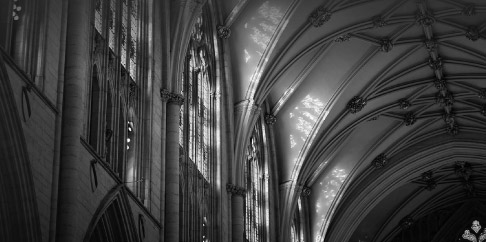
So, what does it mean to bring our grief here, to this place, to York Minster, and to hold it before God?
First, it means permission. Permission to lament. To name our anger, confusion, questions. Psalm 139 speaks of a God who knows our words before they are on our lips — including the words we dare not speak aloud. This is not a God who demands we tidy our emotions before entering church. This is a God who receives our silence, our groans, our unanswerable why.
Second, it means memory. Baby loss is often marked by a cruel forgetting – friends falling silent, society shifting the subject. But here, tonight, we say: our children matter. Our children are remembered. Their names, their presence, their stories are carried in our prayers. And in God, nothing is lost. R. S. Thomas’ poem assures us that even the unborn are gathered, their lives lovingly held with Christ in God.
Third, it means hope. Not easy unearned optimism. Not denial of grief. But hope grounded in the mystery of resurrection. In Christ, life is stronger than death. Love endures beyond the grave. The unborn child, the stillborn child, the baby who lived only hours – each is enfolded in the embrace of God. Not erased, not extinguished, but belonging to the “great kingdom of the living.”
What, then, does this mean for us, the living, who carry the scars of such loss? It means that God is with us in the silence, in the sleepless nights, in the anniversaries that sting. It means that our tears are not wasted but gathered – “put in your bottle,” as Psalm 56 says. It means that grief and faith can coexist, not as enemies but as companions on a long journey.
And it means we are called to be community for one another. To sit beside those who mourn without rushing them. To hold the silence without filling it with clichés. To remember that healing is not about “moving on,” but about learning to live with love that is unfinished.
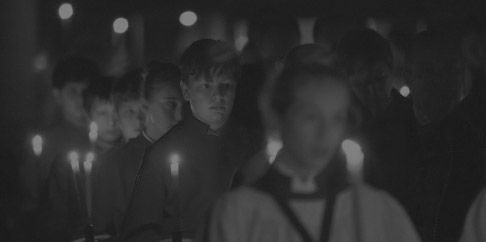
So tonight, as we light candles and speak names, as we weep and remember, we do so knowing that our children are known to God. Their eyes never looked on the sun, as Thomas wrote. Their hands never touched water. But they are gathered. They are cherished. They are part of God’s eternal story.
And we too are gathered – our grief, our longing, our hope – into the arms of the One who formed us in the womb and who will never let us go.
Friends, when words fail, let this be our prayer: That the God who knit our children in love will hold them forever, and that the same God will hold us too.
May God bless each and everyone of you this night.
Amen.
Stay up to date with York Minster
- Event alerts
- Seasonal services
- Behind the scenes features
- Latest Minster-inspired gifts