Following the death of William fitzHerbert Archbishop of York, in 1154 he was laid to rest inside York Minster cathedral. Within a few months, miracles were reported at his tomb by those who had come to honour him and pay their respects. In recognition of the miracles reported, William was canonised by Pope Honorius III in 1226.
Across 95 panels of intricately detailed depictions, the St William Window in York Minster tells the story of William and the miracles attributed to him, in what was one of the largest narratives in stained glass ever made in Medieval England.
The First Miracle
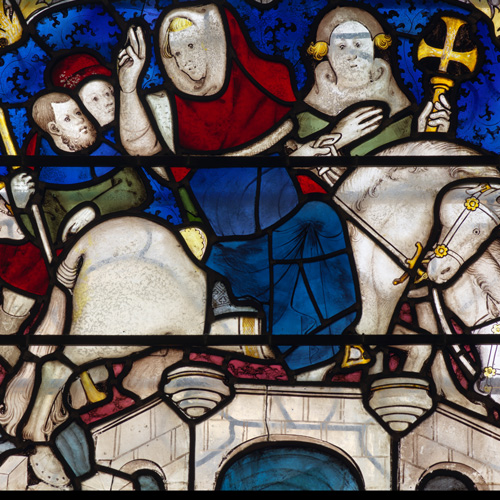
William was beloved by the people of York, and his reinstatement to the See of Archbishop in 1154 and return to the city was met with jubilant crowds. So many people came out to cheer and celebrate his return that as he crossed the river the weight of the crowds caused the timbers of Ouse Bridge to give way and collapse.
Large numbers of people were thrown into the river and were at risk of drowning. William, seeing the carnage, prayed to God for those in peril to be saved and he made the sign of the cross over them. All were saved.
This is considered William’s first miracle.
Miracles at the Tomb
Many miracles were reported at the tomb of St William of York where people from all walks of life, rich and poor, young and old, male and female travelled in pilgrimage to honour William and to seek help.
One miracle depicted in the St William Window tells of a woman who inadvertently swallowed a frog and then journeyed to St William’s tomb with her husband where she was cured by throwing it up.
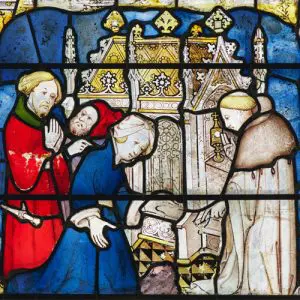
In 1223 a sweet-smelling oil flowed from William’s tomb. The flowing of holy oil was widely regarded as indicating sanctity and, though considered a commonplace saintly phenomenon William is the first English saint recorded to have performed this miracle.
There are numerous accounts of witnessed miracles at the tomb of St William from people who travelled from across the globe seeking help and healing. We can still relate to their concerns today: physical and mental illness, poverty, social injustice, concern for their loved ones, loss and grief.
Miracles to Protect from Danger
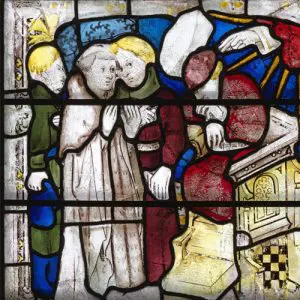
There are numerous reports of St William’s intervention to protect people from danger, from the King to a servant, all attribute their lives being protected to William of York.
Edward I, having accepted an invitation to attend the translation of the relics of Saint William, later has a near-fatal fall from a mountain whilst in Wales. The King was unharmed and he later ascribed his deliverance to have been from St William of York as he had promised to honour him.
A servant to one of the canons at York Minster fell asleep during Matins, whilst resting against the pulpit. A stone column of considerable weight fell on his head. Miraculously the servant is unharmed and he thanked the grace of St William and walked away.
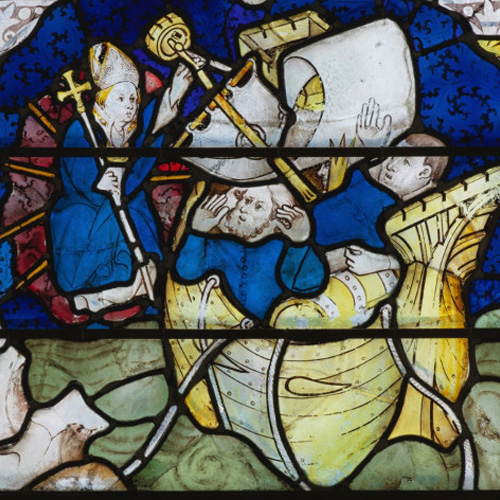
Sailors who were in danger of being shipwrecked, reported that St William appeared in a vision and their ship, which had suffered a broken mast in a storm was protected from running aground on the rocky shore.
As we celebrate 800 years since the canonisation of William as a saint, take the rare opportunity to see pieces from his medieval Nave shrine returned to York Minster for the first time in almost 500 years. Explore his story and see precious artefacts which narrate the life of a man who devoted himself to our city and cathedral.
Plan a visit to our new exhibition.
All the images included above are panels from the St William Window at York Minster. Panel images above:
- ‘9c The miracle of Ouse Bridge’
- ’17c The woman is cured at the tomb’
- ’20d A servant is hit on the head by a stone’
- ’16e Saint William saves a ship with a broken mast’.
To explore further head to the York Glazier’s Trust Stained Glass Navigator to look closely at each panel and find out more of the miracles attributed to St William.
Stay up to date with York Minster
- Event alerts
- Seasonal services
- Behind the scenes features
- Latest Minster-inspired gifts