Down the centuries, saints haven’t always aged well. A few years ago, I was at a conference near Zurich when the organiser took us to what had been the home of one of his favourite saints. Nicholas of Flüe. Well done if you have heard of him – I hadn’t – but he’s actually the Patron Saint of Switzerland. As we were told the story of his life, a few of us began to feel somewhat conflicted about just how saintly he was. As a soldier fighting for the canton of Zurich, it is said that he fought with a sword in one hand a rosary in the other. In the year 1467 he had a vision and decided that God was calling him to devote his life to contemplation. A minor detail in the story is that this involved him leaving his wife and TEN children. (Today that might be called parental desertion, but apparently it all seemed very reasonable at the time).
I imagine that in Switzerland, about as many people have heard of St William of York, as those who’ve heard of Nicholas of Flüe in England. These are not in the stellar lineup of first division international saints, such as a George, Mary or Francis. Instead, they are part of that company of saints often only known in their town or city, and very little beyond those places. According to Ai (which never makes things up) there are more than 10,000 saints recognised in the Christian Church. Perhaps a lot more. Do we really need all these figures, sometimes impressive, sometimes doubtful, littering the liturgical calendar? Well, yes, I think we do.
Part of the reason there are so many is that like William, these holy figures are anchored to particular places. Often their inspiration and sanctity grew after their death, among the people who knew them and loved them. This year, the 800th anniversary of the Canonization of William, we celebrate his association with the city of York and its people. William was a cleric who rose to be the most important priest in the Diocese – Archbishop of York.
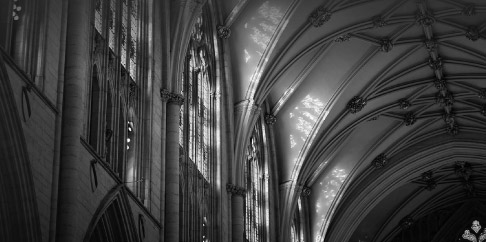
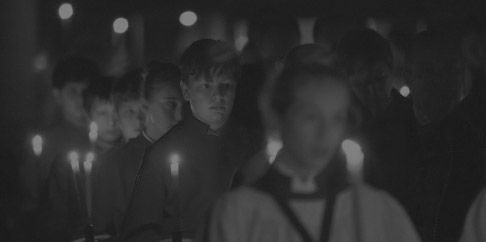
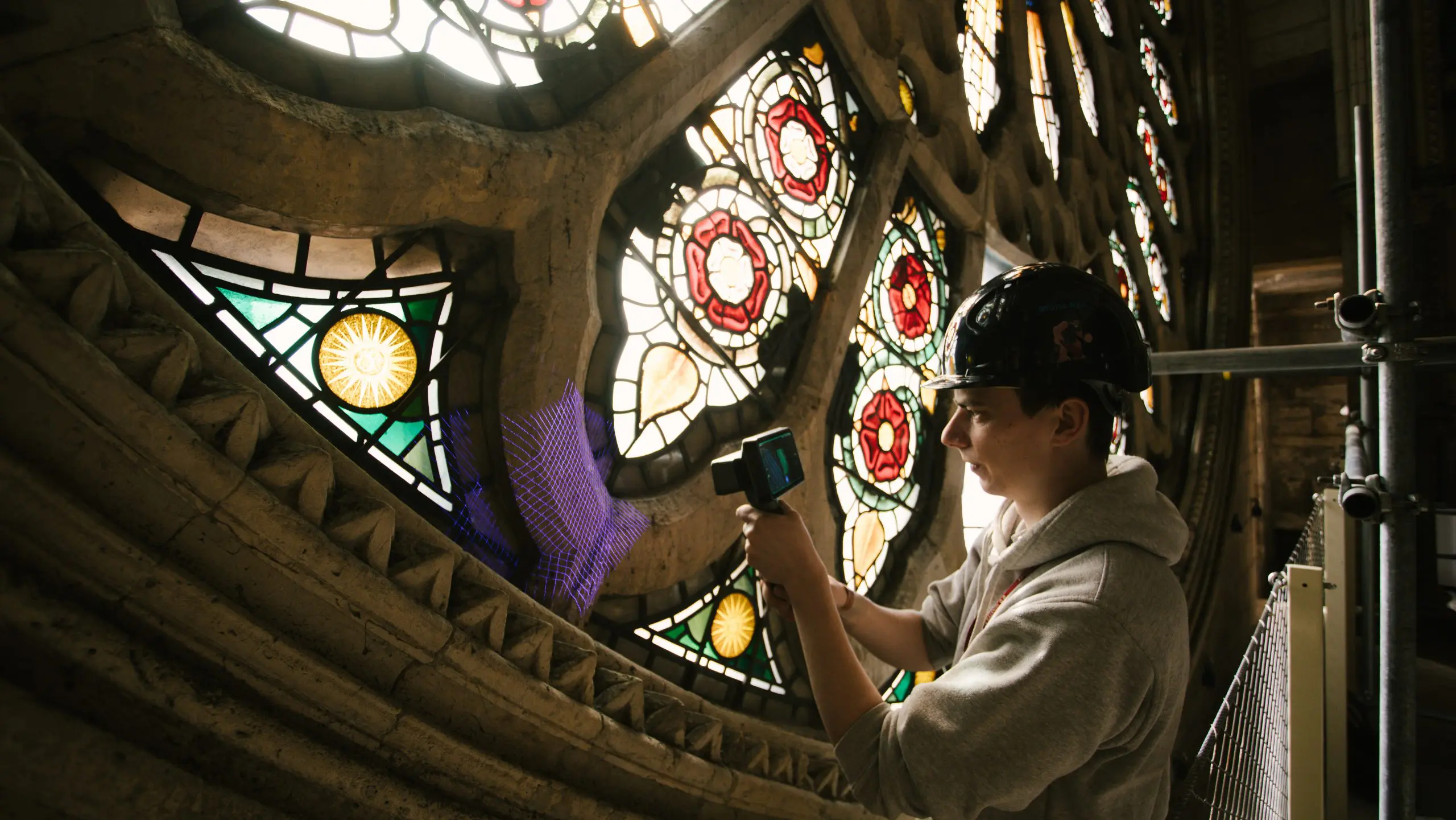
It’s perhaps hard for us to imagine what York would have been like in the year 1226, when he was made a saint. As a building, even though it would not have looked as it does today, the Minster dominated the city. Eight hundred years ago the South Transept was being built and was covered in scaffolding – so not much change there then! The great Rose Window was just beginning to be constructed. More significantly, the things going on in the Minster would have been familiar to us. Candles lit; divine services going on; a choir singing; and pilgrims arriving and leaving.
We know that there are many different aspects a to William’s legacy, leading him to have spiritual significance as someone who waited patiently for his calling to be fulfilled. He was instrumental in both physical and spiritual healing, and who became a patron saint of craftspeople. A fitting association for someone who was made a saint at a time when the Minster-was undergoing transformation and relied on a small army of highly skilled workers. In all sorts of ways, the legacy of William lives on in York.
One of his most notable miracles took place when the Ouse Bridge collapsed due to the weight of a large crowd coming to meet William. Despite many falling into the river, no one died. A fact attributed to the prayers of William. In memory of this event a chapel was constructed at one end of the bridge, and this emphasised William’s role as a bridge between this life and the next – between conflict and peace. Perhaps today, that image of William praying on the remains of the bridge is a good one to inspire our faith.
In our time it feels like many bridges are under pressure – both between neighbours and between communities. In places, all the patient work of pursuing the common good appears likely to fall under the pressure of division. Like William, our prayers and deeds need to ensure that innocent people don’t lose their lives when that pressure leads to collapse.
As we reflect on William’s legacy, let us remember that the work of building bridges – between generations, communities, and faiths – is never finished. The story of the Ouse Bridge reminds us that, even when structures fail, the bonds of compassion and prayer can hold firm. In a world where division often threatens to overwhelm unity, we are called not only to repair what is broken, but to become living bridges ourselves: steadfast, patient, and courageous.
Let us honour William not simply as a figure from history, but as a guide for our own journey. May his example inspire us to reach across divides, to lift up those who stumble, and to stand firm in hope when the weight of the world presses hardest. For it is in these moments – when we choose to build rather than break, to unite rather than separate – that we truly embody the spirit of the saints and ensure that nothing precious is lost in the meeting.
Amen.
Stay up to date with York Minster
- Event alerts
- Seasonal services
- Behind the scenes features
- Latest Minster-inspired gifts