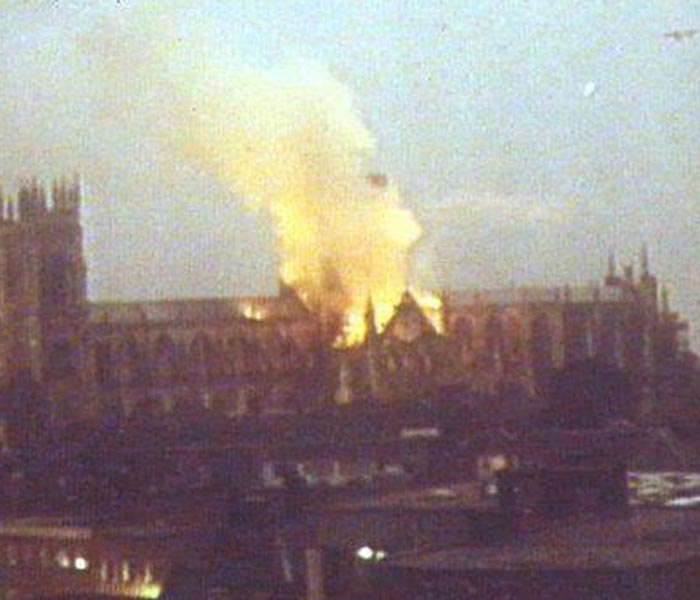
In the early hours of Monday 9 July 1984, York Minster was struck by lightning and suffered one of the worst cathedral fires of modern times. The damage done in just a few hours took over four years to be rebuilt and restored.
Join us as we remember the destruction, give thanks for the restoration, and continue our conservation of York’s magnificent but fragile Minster through poignant acts of worship, brand-new sightseeing activities, and a bespoke light and sound projection.
Explore Reclaimed from the Flames, York’s commemoration of the 40th anniversary of the 1984 fire.
What happened?
At 2.30am on the morning of Monday 9 July, fire alarms ring out at the Minster, automatically alerting North Yorkshire Fire Services who dispatched a team to tackle the blaze. The officer in charge could see at once that the fire was well established in the roof and had penetrated downwards through the vaulting.
Molten lead and debris were falling within the South Transept, making conditions hazardous at ground level. Firemen hauling hose lines up narrow spiral staircases to reach the roof were met with overwhelming heat. A 100 foot ladder was used to reach the blaze from outside the Minster.
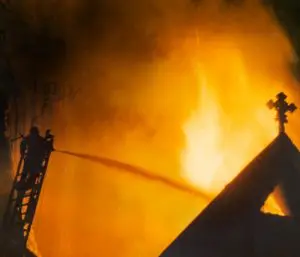 A water canon was set up inside the transept to direct a huge jet of water up towards the heart of the blaze from below. The famous Rose Window was being cooled by water sprayed on the stonework above. Water lines were laid from the River Ouse to support the efforts.
A team of clergy and residents led by the Dean of York worked to save irreplaceable artefacts from the smoke-filled building, dodging falling debris and covering their mouths with wet handkerchiefs to try and avoid smoke inhalation. Soon the Chapter House Yard was piled high with crosses and candlesticks from six large altars, as well as tapestries, books and frontals.
At 3.45 am, with fears that the fire could spread to the Central Tower or Nave, the decision was made to bring the South Transept’s irretrievable wooden roof beams down. Firefighters focused jets of water at the supporting beams to weaken the structure and, like a row of dominoes, the timbers collapsed. The weight of the falling structure dragged the remainder of the roof clear of the Tower and sent it crashing to the ground.
Once the roof material was on the floor, firefighters could work to extinguish the flames and start the long task of checking whether the fire had spread to other parts of the Minster. They battled through dense smoke to inspect the Nave, Quire and Central Tower.
Fire crews were in attendance for approximately 24 hours after the start of the blaze and pumped gallons of water out from the Undercroft beneath the Central Tower.
The Aftermath
As dawn broke the next morning, work began to assess the extent of the damage. The cathedral’s floor was covered beneath five feet of debris and the roofless South Transept left the cathedral’s interior exposed to the elements.
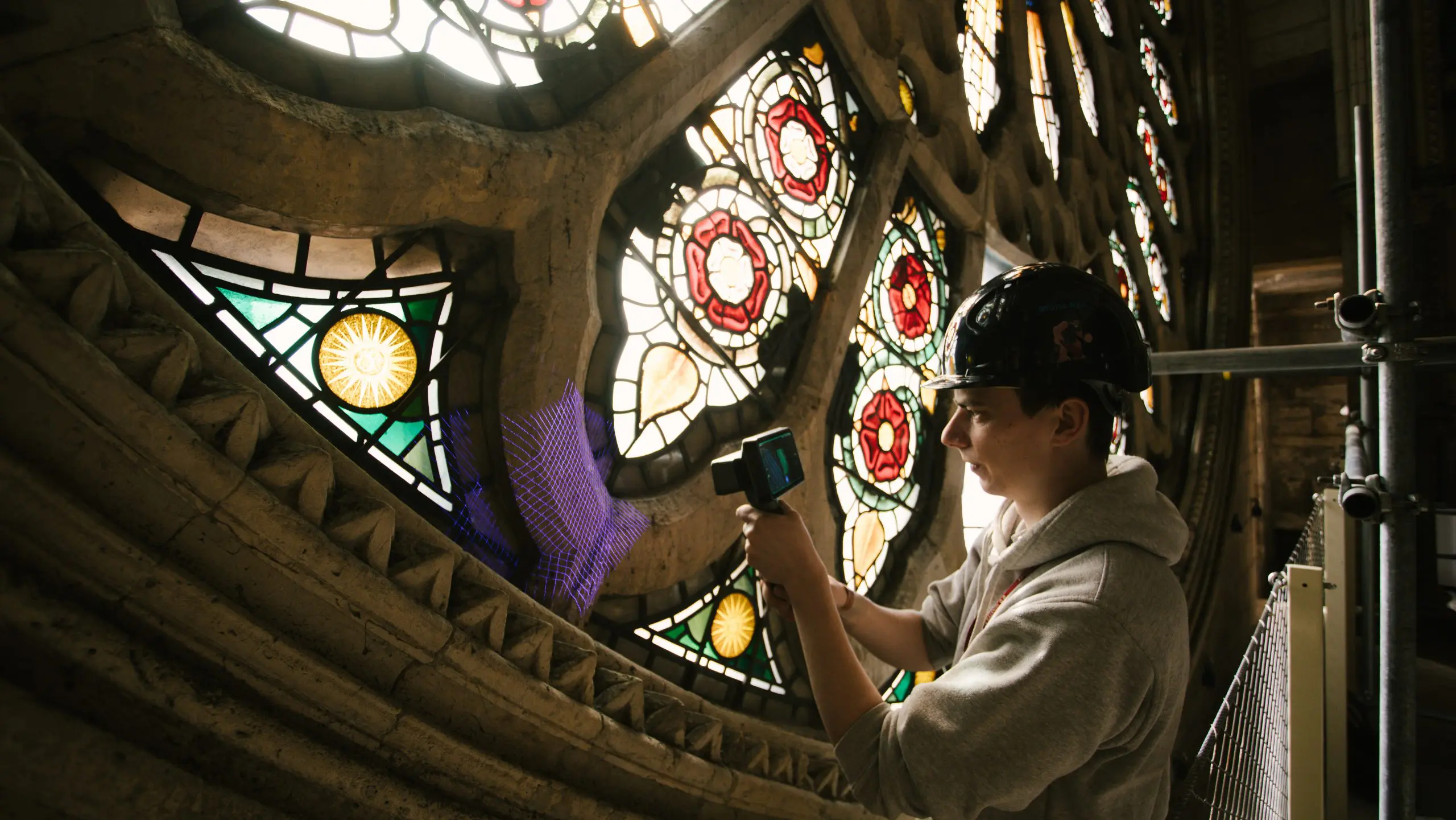
Miraculously, despite being exposed to 450C heat, the famous Rose Window had survived although it had cracked in 40,000 places. The York Glaziers Trust’s astonishing work, including applying
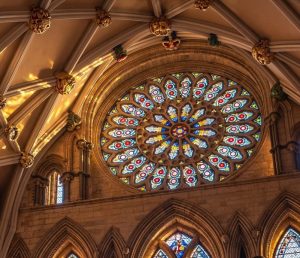
adhesive to each of the 40,000 cracks, saw it successfully restored four years later.
A close inspection of the Rose Window in 2025 found that some of the repairs made following the 1984 fire are now beginning to deteriorate. Once again, this remarkable window faces serious challenges. Increasingly frequent extreme weather events, including heatwaves and intense rainfall, pose a growing threat to its long-term preservation.
Find out how you can support our Rose Window campaign.
Permission of copyright owners has been sought and acknowledged where known. Copyright owners wishing to discuss the use of their images are asked to email collections@yorkminster.org.
Stay up to date with York Minster
- Event alerts
- Seasonal services
- Behind the scenes features
- Latest Minster-inspired gifts