
York Minster Crowned National 12-Bell Champions in Bells’ Centenary Year
Around 650 ringers and supporters gathered in York as the Minster’s band secured a memorable victory on its own centenary bells in the country’s most prestigious ringing competition.
York Minster’s bellringers crowned a remarkable centenary year for the cathedral’s famous twelve bells by winning the National 12-Bell Striking Contest Final on Saturday 20 June. Around 650 ringers and supporters travelled from across the United Kingdom to York for the country’s most prestigious ringing competition. The home team delivered what judges described as a “stunning” performance to secure victory on their own bells, exactly one hundred years after the current ring of twelve was installed in the Minster.
Band leader Ed Mack said: “I am incredibly proud of the York team. Success in this contest comes from dedication, hard work and teamwork over many months. Everyone made sacrifices, supported one another and persevered through an intensive programme of practices. This victory belongs not only to the twelve who rang in the final, but also to the wider band, our supporters and volunteers, and the many people who helped us prepare along the way. To win on our own bells during their centenary year, in front of so many friends from across the ringing community, makes the achievement even more special.”
The contest returned to York for the first time since 1999, when the Minster band also won on home ground. This year’s event combined outstanding ringing with the warm welcome for which York Minster is renowned.
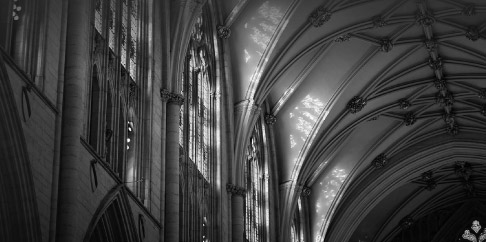
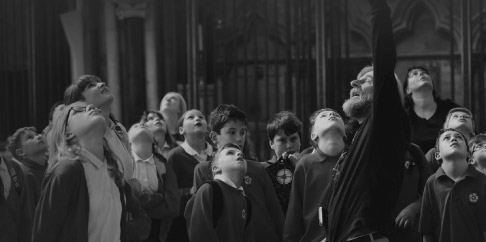
Nine finalist teams gathered beneath the soaring vaults of the Nave for the draw and official photographs before making the climb up the Minster’s famous 100 steps to the ringing chamber. Each band was allocated a thirty-minute session in which to ring both a practice piece and a test piece on bells widely regarded as among the finest in the country. Visitors enjoyed glorious summer weather throughout the day, while competitors faced rather warmer conditions in the ringing chamber itself.
Between performances, ringers gathered at contest headquarters in The Cross Keys, catching up with old friends, making new ones and enjoying the unique atmosphere that accompanies major ringing events. More than thirty volunteers, easily recognised in their red York Minster t-shirts, helped ensure that competitors and visitors alike received a warm welcome and that the day ran smoothly from start to finish.
The contest also marked a significant milestone in its history, with the first all-female judging panel ever appointed for a National 12-Bell Final. The four judges included a mother-and-daughter team, reflecting the growing diversity of leadership within the ringing community. As evening approached, competitors and supporters gathered at Central Methodist Hall for the eagerly anticipated results. Bristol was announced in third place, with Birmingham – the most successful band in the history of the competition – taking second place. York Minster emerged as worthy winners, producing a performance that stood out amongst a field of exceptionally high-quality ringing.
The winning band comprised David Hull, Helen Taylor, Alison Edmonds, Simon Edwards, Andy Blacklock, Joe Waters, Ryan Mills, Samuel Austin, William Regan, Julia Cater, Ewan Hull and Ed Mack.
The victory provided a fitting climax to the centenary celebrations of York Minster’s bells and marked one of the most memorable achievements in the band’s modern history. It was also a powerful demonstration of the skill, dedication and community spirit that continue to keep the ancient tradition of change ringing thriving in the twenty-first century.
A Day of Ringing at York Minster: The National 12-Bell Final returns to one of the world’s great ringing cities
York Minster will host the 2026 National 12-Bell Striking Contest Final on Saturday 20 June, bringing together some of the finest bellringers in the United Kingdom for a day of music, skill and celebration in one of England’s most magnificent cathedral settings.
This year is especially significant for York Minster as it marks the centenary of its current ring of twelve bells, cast by John Taylor & Co and installed in 1926. For one hundred years these bells have rung out across the city, calling people to worship, marking national occasions, and celebrating moments of joy and remembrance in the life of York and the nation.
On 20 June, those same bells will provide the challenge for the country’s leading twelve-bell bands as they compete for the prestigious Taylor Trophy. The contest returns to York for the first time since 1999, when the home band famously won on its own bells.
The Dean of York, the Very Revd Dominic Barrington, has welcomed the return of the contest as a fitting way to celebrate the bells’ centenary year. He describes church bells as both a reminder of God’s presence and an invitation to worship, celebration and community. Their sound remains one of the most distinctive features of England’s spiritual and cultural heritage.
Visitors can expect a day filled with the sound of outstanding ringing in a setting renowned throughout the world. As well as hearing some of the best striking in the country, ringers and visitors will have the opportunity to meet friends from across the ringing community and enjoy the unique atmosphere of a major national event while exploring the historic city of York.
Contest ringing is expected to begin at approximately 11.30am, with the results announced at around 5.30pm.
Finalists this year include bands from London, Birmingham, Bristol, Cambridge, Guildford, Leeds and York, creating a particularly exciting Yorkshire rivalry as Leeds challenges the home team on York’s own bells.
The National 12-Bell Striking Contest has been held annually since 1975 and is widely regarded as the premier competition in the art of change ringing.
Whether you are a dedicated contest follower, an occasional listener, or simply curious to experience the sound of world-class ringing in a great cathedral, you will be warmly welcomed.
Further details, timetable and results are available at 12bell.org.uk/york2026.
Returning St William’s College to use
Work to bring the historic Grade I listed St William’s College back into active use will begin in June 2026, marking an important new chapter for one of York’s most significant historic buildings.
The striking timber framed building is one of the finest surviving examples of a 15th‑century clerical college in England. Founded for the priests of St William’s chantry in 1456, it forms a significant part of York’s historic landscape and has a religious heritage closely intertwined with the life of York Minster.
The restoration and sensitive adaptation of St William’s College is a key milestone within York Minster’s Precinct Neighbourhood Plan, adopted in 2022. The Plan sets out a long‑term vision to protect York Minster’s exceptional heritage, manage essential change carefully, and ensure that the Minster Precinct—centred on the iconic cathedral—continues to serve as a living, welcoming and sustainable place at the heart of the city.
Alex McCallion, Director of Works and Precinct, said:
“The great antiquity, scale and historical significance of St William’s College creates a delicate balancing act as we seek to protect, restore and bring this extraordinary building back into use. Its Grade I listing, reserved for buildings of exceptional architectural or historic interest, means that we have to work sensitively to ensure the building’s unique character is preserved, whilst working to our strategic ambitions to reduce our carbon footprint and create spaces for the needs of today’s visitors, worshippers, and our workforce.
“Working with Caroe Architecture and Simpsons of York, we will build on the success of the Neighbourhood Plan, including the award‑winning Centre of Excellence for Heritage Craft Skills and Estate Management and the retrofit of 1 Deangate, to give another of York’s historic treasures an appropriate C21st renaissance.”
St William’s College closed in 2014 to allow essential reroofing works to take place. The Chapter of York, York Minster’s governing body and the sole trustee of the St William’s College Trust, subsequently secured planning permission and listed building consent through the policies of the Neighbourhood Plan for a programme of significant but carefully considered alterations to enable the building to meet the needs of the 21st century.
Once complete, the building will house the offices of the Chapter of York and provide event and conferencing facilities. The project includes the introduction of level access, a new lift, and changes to the courtyard to improve accessibility. Alongside this, the scheme reflects the Minster’s wider commitment to sustainability, balancing the building’s fragile historic fabric with measures to support energy efficiency and environmental responsibility.
The project is especially timely as this year York Minster is marking the 800th anniversary of William fitzHerbert being declared a saint. William was widely venerated in the city and later became known as York’s patron saint. St William’s College stands as a powerful reminder of his enduring significance within the religious life of medieval York.
Following the English Reformation and the suppression of the veneration of saints, the building passed into private ownership before coming into the care of the Chapter of York in the early 20th century.
The restoration to St William’s College is expected to be completed by the autumn of 2027.
For more updates, please see: https://yorkminster.org/discover/behind-the-scenes/restoring-st-williams-college/
Minster to host consecration of three new bishops
The Archbishop of York, Stephen Cottrell, will consecrate three new bishops in a service at York Minster on Thursday 10th October beginning at 11am. The Reverend Canon Dr Flora Winfield will be consecrated as the Suffragan Bishop of Selby, and the Reverend Barry Hill will be consecrated as the Suffragan Bishop of Whitby. Alongside them, the Venerable Patricia Hillas will be consecrated as the Bishop of Sodor and Man.
Flora and Barry will be presented for consecration by the Bishop of Leeds, the Rt Revd Nick Baines; the Bishop of Leicester, the Rt Revd Martyn Snow; and the Bishop of Hull, the Rt Revd Dr Eleanor Sanderson.
The Bishop of Selby holds a particular responsibility for the care of the people, parishes, and clergy in the Archdeaconry of York, including Selby, Market Weighton, Malton, Easingwold, and the City of York itself. Additionally, the Bishop of Selby will serve as the episcopal lead for the implementation of the Diocese of York’s transformative strategy, ‘Living Christ’s Story’, and will be the principal point of reference for the diocesan administration to facilitate this organisational change.
The Bishop of Whitby holds a particular responsibility for the care of the people, parishes, and clergy in the Archdeaconry of Cleveland, which stretches from Thirsk north to Middlesbrough, along the coast to Whitby, and south to Pickering. Additionally, the Bishop of Whitby will lead the Diocese of York’s priority of Growing Younger and More Diverse, ensuring this is understood and woven into the whole diocesan mission and ministry, and will serve as Chair of the Board of Education with a particular care for the 121 Church of England schools in the Diocese.
Flora succeeds the Rt Revd Dr John Thomson, and Barry succeeds the Rt Revd Paul Ferguson. John and Paul retired in July 2024, having served as bishops in the Diocese of York for 10 years.
In 35 years of ordained ministry, Flora has served in parish and cathedral ministry and as a university and Armed Forces Chaplain, in ecumenism, in support for the Anglican Communion and in humanitarian diplomacy. Currently, she serves the Church of England as the Third Church Estates Commissioner. Flora is married to the Venerable Jonathan Gough, and they have a black Labrador dog.
Barry has served for the past two decades in various parish roles across the Diocese of Leicester, alongside diocesan-wide roles in parish renewal and mission, overseeing fresh expressions of Church and church planting, and discerning diocesan strategy with a focus on growing younger. Barry is married to Stephanie (Pep), who is also ordained, and is father to Greg and Katy. Their dog, Tilly, is considered the “fifth member of the household.”
Ahead of her consecration, Flora said: “As this joyful day approaches, I am both humbled and thankful to have the opportunity to serve as Bishop of Selby. I am excited to discover what great things God is doing with his Church in this diocese, and to play my part, together with Archbishop Stephen and with fellow bishops, in leading, resourcing, celebrating, listening, caring, and praying with you, as we look to the future with confidence and hope.
“I ask your prayers as I get to know the clergy and peoples of the diocese. As we recognise and share the story of God at work among us, in everyday life, we can discover together what it means to receive God’s needful gifts of grace. Every day, we come before God for healing and forgiveness, turning to Christ, and building together communities which, by the way we live as well as what we say, proclaim to the world God’s generous grace, abundant hospitality and eternal welcome.”
Barry said: “As anyone who has moved house, school, job or taken up a new ministry hopefully knows, it is not hard to discover new depths of the grace and faithfulness of God amidst all the emotions and practical challenges and opportunities such transitions bring! I look towards consecration on 10th October, the welcome service in the Archdeaconry of Cleveland on 23rd October and then getting to know the people and places of the area with much excitement and profound hope, but also with slight discomfort at the focus on me, given our call is to look on God who changes everything and live as communities gathered around the risen Christ. Be assured of my prayers and, especially as I prepare for ordination with the sisters at Whitby, am so very grateful for yours.”
Archbishop Stephen said: “It will be a joy to consecrate Flora and Barry to their roles as Bishop of Selby and Bishop of Whitby. They bring a wide range of gifts and skills to the Diocese and will be an asset as we continue to Live Christ’s Story, seeking to grow younger and more diverse, and to share the Good News of the Gospel with all people in York. The 10th October is the Feast Day of Paulinus. We know that the same Spirit which inspired Paulinus almost 1400 years ago continues to guide us, and I am sure we all welcome Flora and Barry to faithfully and prayerfully journey alongside us as we continue the revitalisation of God’s Church in our Diocese. I look forward to working and worshipping alongside them. If you can, please come to the service. There is plenty of room.”
Following their consecrations at the Minster, each bishop will be welcomed at a service in their respective archdeaconry. The service to welcome Bishop Flora as the Bishop of Selby will take place in Selby Abbey on Sunday 3rd November at 3.30pm. The service to welcome the Bishop Barry as Bishop of Whitby will take place in All Saints’ Northallerton on Wednesday 23rd October at 7pm.
The consecration is a public service, and anyone is welcome to attend. No booking is required for general admission. It will be livestreamed on the Minster’s YouTube channel: youtube.com/@YorkMinsterOfficial.
Topping Out the Heritage Quad
Cathedrals are well-known for their revered traditions, but the ‘topping out’ of a new Heritage Quad, a new state of the art home for York Minster’s team of stonemasons and heritage craftspeople, is perhaps not the first that springs to mind.
Celebrating the placement of the highest beam in a new building, the ancient rite of topping out can be traced as far back as the 7th century when Scandinavians would place a tree atop a completed building to appease the tree gods of surrounding habitats.
Despite its Norse history, York Minster’s ceremony instead sought God’s blessing on a new home for its stonemasons and craftspeople, built in the shadow of the city walls. The Very Reverend Dominic Barrington, Dean of York, led the blessing ceremony, which was attended by representatives from the diverse organisations who have contributed to the building.
The Heritage Quad is part of the Minster’s ground-breaking Neighbourhood Plan, which is transforming the Minster Precinct to face the challenges of the 21st century. As well as providing state of the art workspaces for the Minster’s masons, the Heritage Quad will include accommodation for apprentices, rooftop solar panels, and rainwater capture systems with the whole Centre built to low energy standards.
The public are already enjoying elements of the Neighbourhood Plan: two new green spaces have been created to the east of the Minster, free for all to enjoy, and the Minster Refectory, opened in spring 2023 by His Majesty King Charles III and Queen Camilla, offers visitors unparalleled views of the Minster.
With the opening of the Heritage Quad, visitors to York will be able to walk the city walls and gaze down into the workshops to see the stonemasons at work in a building that has already won several prizes for its pioneering design.
Alex McCallion, Director of Works and Precinct at York Minster, said: “This is a symbolic milestone in this incredibly exciting project as we begin the final stages of construction ready for the team to move into their new facilities this Autumn. This traditional ceremony also gives us an opportunity to thank our many benefactors who have supported York Minster Fund in this fundamentally important project to safeguard the future of York Minster, but the traditional crafts that are needed to care for a complex estate such as this”.
80th Anniversary Commemoration Service at York Minster: The Battle of Kohima
80th Anniversary Commemoration Service at York Minster: The Battle of Kohima – the turning point in the Far East Campaign during the Second World War.
The Kohima Educational Trust, with 2 Signal Regiment and York Minster will hold a Service of Remembrance on Thursday 4th July at 11am in Dean’s Park at York Minster. The Service will commemorate all those who fought and died for their country during this crucial battle.
The service will be attended by descendants of veterans and friends of those who fought, together with The Lord Lieutenant of North Yorkshire, the Lord Mayor of York, and The Sheriff of York.
In April 1944 the town of Kohima was besieged by a Japanese division spearheading what they hoped would be the invasion of India. The defenders, 1500 men of the Royal West Kents, the Assam Regiment and the Assam Rifles, held out for two weeks until relieved by their comrades of the 2nd British Division. The ensuing battle, fought at close quarters for two months, was the first defeat of the Japanese by the British army, and a turning point in the war in Asia.
The town of Kohima was completely destroyed, but this did not prevent the local inhabitants from supporting the British and Indian troops as guides, porters and combatants. Without the help of the Naga people, it is doubtful if the battle could have been won.
Sylvia May, CEO of the Kohima Educational Trust comments:
“Our annual service, this year commemorating the 80th anniversary of the battle, is a marvellous occasion when families and friends gather in front of the 2nd Division memorial, a replica of the one that stands in Kohima, to remember those ‘who did not come home’. We are honoured to be hosted by the Dean who will conduct the service and we are delighted to welcome this year the Venerable Dr (Air Vice-Marshal) Giles Legood, Chaplain-in-Chief and Archdeacon for the RAF, who will give the Address.
The Dean of York comments:
“In this major anniversary year, we are privileged to host this important memorial that recalls one of the significant events of World War II. The Kohima Educational Trust’s work with the Naga continues to be profoundly important and it is an honour for the Minster to be associated with this.”
Stay up to date with York Minster
- Event alerts
- Seasonal services
- Behind the scenes features
- Latest Minster-inspired gifts