“… and then they remembered that these things had been written of him and had been done to him.”
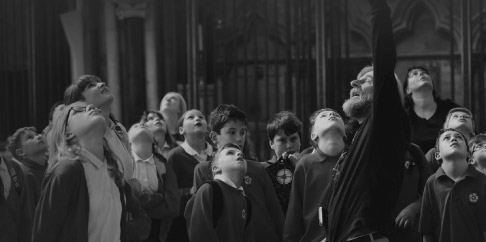
Holy Week begins with a noisy, jubilant parade.
Solitary people break out of isolation when they become a crowd, when the energy of individual hopes and dreams fuses together to become a force exponentially more compelling than the sum of the parts.
I’ve felt this “crowd vibration” when on warm, fall Friday nights, the marching band and the high school football team enters the stadium. (I refer, of course, to American football.)
Some people know it at rock concerts when everyone is on their feet, dancing and singing every lyric along with the band. You are swept up in emotion that transcends you. The founder of Sociology called it “collective effervescence.” Contemporary theorist, Jonathan Haidt, calls it “hive mind.”
I’ve seen the newsreels when crowds along the streets cheered the troops marching to war.
I experienced this crowd vibe in the fall of 2000, on Election Day, when after a long campaign and the voting process, one of two rival presidential candidates would be chosen.
I live in Austin, Texas, the capital of the state, where one of the candidates was the Governor.
All day long people confided, gossiped, speculated, anticipating a final win for their candidate, and there were victory parties being set up all over the city, the sense of anticipation was so thick, you could hardly breathe.
It was as though a balloon was filled to the breaking point, (on both sides) hearts were brimming with anticipated joy.
When we woke the next morning to learn the outcome, an eerie quiet hung over the city. There had been anomalies with the balloting. No victor would be announced today. The outcome was delayed.
It was like the whole city deflated like that giant balloon,
all that collective effervescence had no place to go;
no one could feel either the joy or the disappointment they had been building up to; no one knew what to feel.
It was in that “day after” that I realized how high we had all been.
A high like this infected the crowd that went out to meet Jesus.
They waved branches of palm torn from the trees, and shouting Hosanna, Save Us! Save Us! Save Us!
They were filled with that collective anticipation of a king, their king, who was coming in the name of the Lord, entering the city of Jerusalem, riding on a donkey.
It was a partisan parade. The king would finally deliver them.
The king would bring back the glory days. They were high as kites,
and as worshippers on this Palm Sunday, hearing this reading we too share in their buzz.
Jesus had brought a man back from the dead. His friend Lazarus had died. His family and the whole village had mourned and wailed – then they wound the hands and feet of his corpse in cloth and covered his face. They buried him in a cave and plugged it with a stone.
At his tomb Jesus’ prayed, “Father,” and then he cried,
“Lazarus Come out.” And then “Unbind him and let him go.”
The crowd was getting ready to crown this man king, the one who brought life to the dead.
The pinnacle of his popularity was the time of his most severe peril.
Now is set into motion the collision course, between Jesus and the rulers of the world.
It was their power over life and death that kept the rulers in their high places.
They were asking themselves:
Would he be calling other corpses out of their tombs?
What if the people feared death no more?
What if death were not the final end?
But the exuberant clamor of the procession of the palms collapses into the confused quiet of the passion we hear chanted today. The days after the high when the giant balloon deflates.
The last days of Jesus’ life are the center of gravity of the gospels. It is this traumatic, unexpected, this spiritual, political, personal disaster – the death of the rabbi, preacher of the kingdom of God, that the first followers of Jesus suffered.
How could they bear it?
How could they comprehend the incomprehensible?
How could they take it in, the shame and devastation?
Even when they met the risen Jesus again, alive, but wounded, flesh and not flesh, eating and reading with them, they did not understand fully.
“His disciples did not understand these things at first; but when Jesus was glorified, then they remembered that these things had been written of him and had been done to him.”
It was only afterwards, as they remembered how it all unfolded,
and as they broke bread together and ate and drank in his memory,
as they read the scripture psalms and prophets,
that the scattered details began to come together,
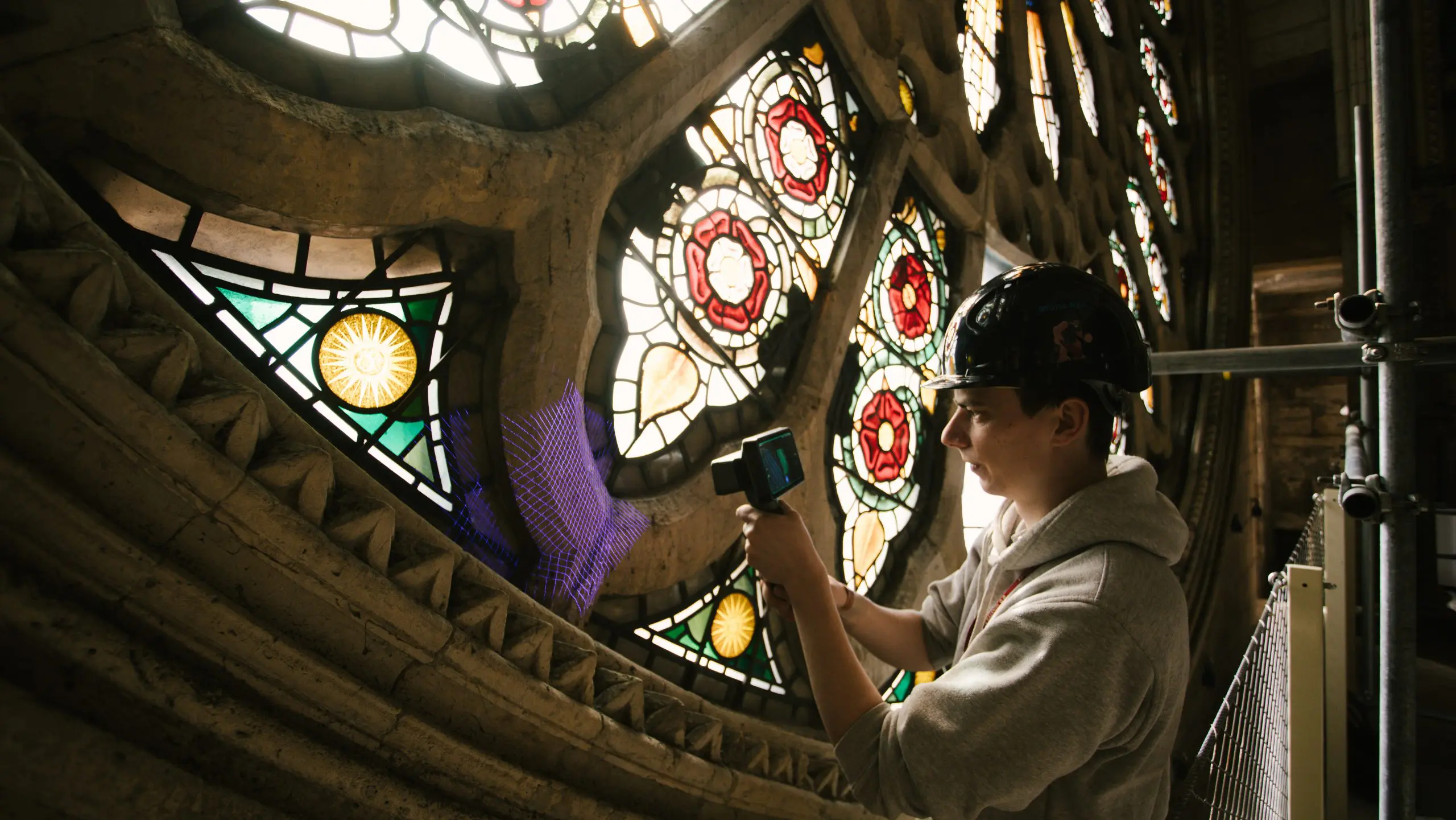
the way God works in mysterious ways started to appear, the colored threads wove themselves into a pattern, then a picture, then a tapestry. Over time they read what had been written… they prayed and opened up to God’s enlivening spirit. They discovered words for it – “emptying,” “dying,” “exalted” or “glorified.”
They began to comprehend the incomprehensible and see how through the most horrific ugly act,… God was doing a new thing.
In Holy Week we join in this act of remembering.
We read with the evangelist of the gospel of John, that germinated in the memories of the disciple whom Jesus loved, and bloomed into the extraordinary theology and poetry.
I call it the long goodbye, because it is long, literally, in the gospel of John.
And it is long, because it takes multiple lifetimes to comprehend, to apprehend the glory.
In Holy Week the church relives these most sacred days, together, in ritual, with music, objects, palm branches, fragrant oil, water, bread, wood. Not an hour on Sunday but stretched out across a week of days, attending to each incident, every word, of each day that preceded Jesus’ execution.
When we do this, we enter into living remembering, present remembering. We bring into the present the past, and in it we experience the struggle to understand, the wrestling with evil, coping with what should not happen but does happen. Like the disciples we exercise “sacramental imagination.”
Palm Sunday sets up questions for the week ahead:
Will we be able to endure this parting from our beloved teacher?
Of what nation, is this man the king?
Who will prevail, the “world” or the Father?
Finally, were they wrong, the jubilant people waving the branches and singing with joy, Save Us! Save Us! Save Us!?
Or were they… in some mysterious way… were they right?
Amen.
Stay up to date with York Minster
- Event alerts
- Seasonal services
- Behind the scenes features
- Latest Minster-inspired gifts