

1 Samuel 24.1-17; Luke 14.12-24
Before I retired, my job meant that I was from time to time invited to formal dinner parties with High Sheriffs and the like. I soon learned that there was an etiquette involved – mode of dress, times of arrival and departure, conversation at the table, both whom you spoke to and about what, and then in some cases at the end of the meal the ladies withdrawing.
And so it would have been in Jesus’ day. There would have been a dinner party etiquette, though I am sure it would have been very different from today’s version.
In our New Testament lesson, Jesus spoke about a great dinner party. We don’t know what the RSVP system was in those days and whether those who had originally been invited had previously indicated that they would come; but as the time approached and no one had turned up, the host was anxious and troubled, and sent his slave to remind them it was time to show up. And they all made excuses.
They were quite extraordinary excuses really – I have bought a piece of land; I have bought five yoke of oxen; I have just got married. You would have thought if you were investing expensive capital in your farm, you would have looked at the land and tested the animals before agreeing to purchase them. And if you had looked at them, then as an excuse it falls away very quickly. As for the newly married, Deuteronomy 24:5 gave them a twelve-month exemption from war and other public duties, but that was all.
It is of course only a parable, a story, and so we mustn’t stretch it too far. But the principle is that those who might have been expected to be invited and in fact were invited to God’s feast had said “no”, and so God invited all the most unexpected guests, and they gladly came to this upside-down party.
Jesus had been travelling around Galilee calling people to come and be part of God’s Kingdom and most of those who you would expect to be first on the list, such as the religious leaders of the time, said they wanted nothing to do with it. But those who were religious or social nobodies responded gladly and said “sign me up”. The ordinary people – fisherman and the like; the despised people – tax collectors and sex workers; the excluded people – the diseased and disabled; it is they who gladly accepted the invitation to come and feast at the table spread by Jesus.
And for Luke there is an even wider meaning. Luke is very focussed on the good news being available to a much wider group than God’s original chosen people. And to the extent that many of them chose not to accept the invitation it was now offered to the whole world; to every tribe and nation.
And of course, if you join that sort of party, you quickly get its message, and it rapidly comes full circle. Jesus is saying to all those who have come in – you have joined the upside-down club and that will now affect your lives and how you live them.
And that continues today. God is in the turning things upside down business. God always has been and always will be.
When I say always has been – let’ s go back to our OT lesson. King Saul was hunting down David as he believed he was a threat to him. And there was no doubt that he was hunting him down to kill him. Saul had 3000 men with him as he searched the wilderness where he believed David was hiding. There came a point when Saul needed to go to the loo. He spotted a cave and went in. Right at the back of the cave David was hiding with his much smaller band of men. When they saw Saul, his men encouraged David to go and kill him, but he refused. He did creep up on him and cut a snippet off his cloak. But more than that he refused to do.
I guess it is probably no surprise to us as David was trying to keep God’s commandments and live so as to please God. But it was counter intuitive to the society of his time. People naturally look for vengeance.
And we are seeing a lot of that today. When something bad happens then there are calls for vengeance. You will recall the demands a couple of weeks ago for a response of rage to the killing of Henry Nowak. Calls for pure rage, cold rage, white rage, righteous rage – but all looking for rage to dictate how we should respond.
Sometimes it is even dressed up in pseudo Christian language. You may recall some weeks ago the US Secretary of War quoted what he thought was the prophet Ezekiel, though the words he used were the adaptation of Ezekiel by Quentin Tarantino in Pulp Fiction, as he called for vengeance against Iran. Putin even uses religious language to justify his attacks on Ukraine. And as we have just reminded ourselves, we hear it in our own country with calls to respond in rage when an innocent person is killed, particularly if it is done by someone who is of a different race or colour to us.
It should be no surprise to us, that those who follow Jesus Christ are called to live differently, and so often to behave in a counter intuitive way as we demonstrate God’s true values. When we do so it can have a similar impact on people as David’s behaviour did on Saul. Deep down Saul knew he was wrong and that David was right and when David confronted Saul and told him what he had not done, we read that Saul wept.
But Jesus is going even further when he says that when we act rightly and do good, we should not be looking for favours in return.
Certainly, Jesus said in the sermon on the mount “Do to others what you would want them to do to you” (Matt 7:12). But that is not the same thing as doing something to others in order that they will reward you in the same way.
How would you like to be treated? Well, that’s how you should treat other people. But you don’t treat them in particular ways so that they will treat you in the same way. We know that the path Jesus followed of doing good to all manner of people led to him being rejected and eventually killed. So you don’t do it for that reason, you do it because it is how we are called to live as followers of Jesus Christ.
Coming back to where we started, which was with the dinner invitation to the poor, the crippled, the blind and the lame, who were invited when the healthy and the wealthy declined to come having, as they thought, better things to do.
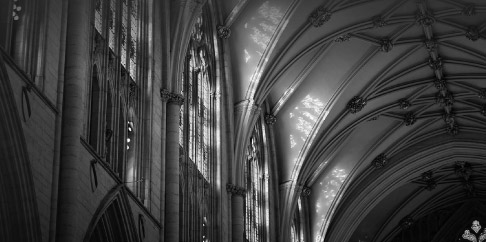
As many of you will know this last Thursday the Archbishop came to Evensong and blessed the new ramp which gives entry into this quire. And that ramp is a symbol of what we are trying to be as a part of Christ’s church – a place that is open to all. A place of welcome and accessibility for those who would have thought “this is not somewhere for me to go as I can’t get in physically”. Let alone, all those who feel excluded for reasons to do with who they are or how they live; to do with their disability, ethnicity, gender, sexuality, mental health, or poverty. Here at York Minster, we extend an open and unconditional welcome to all people to come and join with us as we feast at his table. And it is round his table that we learn what it means to live upside down lives.
Amen.
Stay up to date with York Minster
- Event alerts
- Seasonal services
- Behind the scenes features
- Latest Minster-inspired gifts