

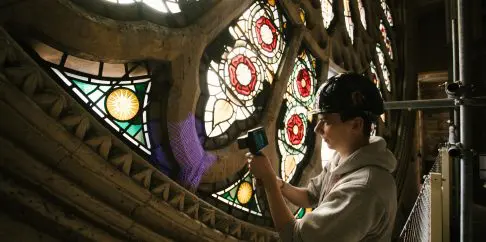
The Rose Window: An Extraordinary History
The Rose Window is one of York Minster’s most spectacular treasures. This 73 panelled stain glass is not only visually striking but it has a fascinating history as well.
Origins
The stone tracery of this magnificent window was completed around 1240, although none of its original 13th-century glazing survives. Instead, the window contains a fascinating collection of glass from different periods.
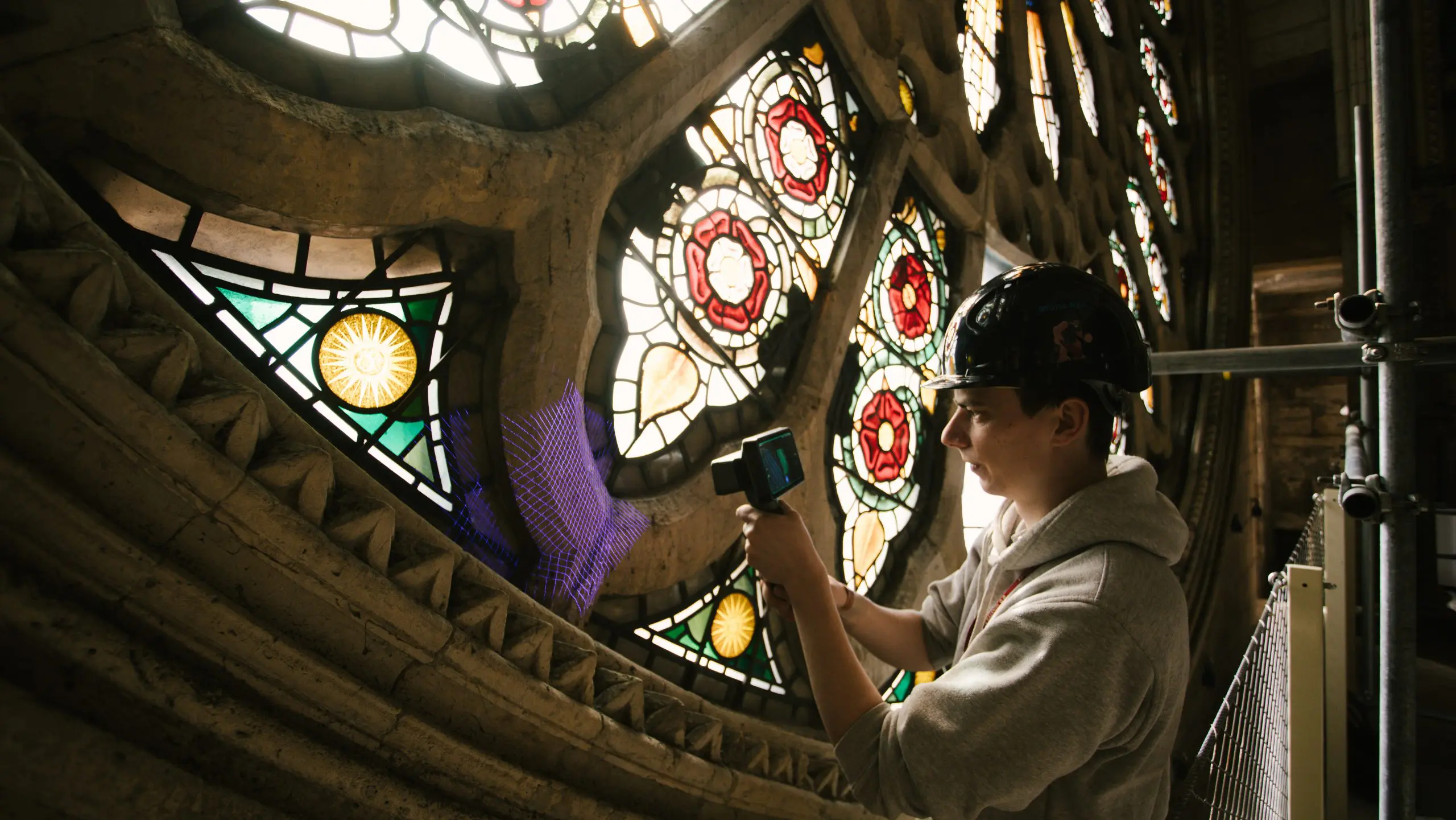
The glass that gives this window its name, the roses, dates from around 1500 and was probably created by John Pety, the distinguished glazier and Mayor of York. Its design incorporates the red rose of Lancaster alongside the red-and-white Tudor rose, and is widely believed to commemorate the end of the Wars of the Roses. The window celebrates the union of the houses of Lancaster and York, sealed by the marriage of Henry VII and Elizabeth of York in 1486, which marked the beginning of the Tudor dynasty.
Later Restorations
The sunflower in the centre of the window dates from the restoration carried out by William Peckitt in 1793, one of the most celebrated glass painter’s of the eighteenth century. The window was restored and releaded again in 1970, when 24 triangular panels were added to complete the design.
The Fire of 1984 and the Saving of the Rose Window
In the early hours of 9 July 1984, York Minster was struck by lightning and suffered one of the most devastating cathedral fires of modern times. The cathedral’s Rose Window, an enduring symbol of the union between the Yorkist and Lancastrian houses that had overlooked the city for more than 500 years, was exposed to temperatures of around 450°C resulting in 7,000 pieces of glass being cracked in 40,000 places.
An extraordinary restoration effort followed to save the Rose Window. The Rose Window was saved through the astonishing work and technical skills of the York Glaziers Trust. This conservation work involved the delicate cleaning of each panel and the injection of epoxy resin adhesive into the micro-cracks in the glass. To strengthen the repaired glass, each piece was carefully sandwiched between modern clear glass plates.
Professor Sarah Brown, the former Director of the York Glaziers Trust, explained: “These windows have a history stretching back many hundreds of years. They can be attributed to the workshop of Robert Petty in the late 15th century and have undergone a variety of restorations and additions, as well as being completely removed during the Second World War.
“It was Peter Gibson OBE, former superintendent of the York Glaziers Trust, who insisted that the Rose Window could be saved after the 1984 fire. At the time, some people saw its perilous condition as an opportunity for a completely new stained glass commission! Thankfully, his advice was heeded and the glaziers worked tirelessly to restore the artwork.”
Protecting the Rose Window for the Future
A close inspection of the Rose Window in 2025 found that some of the repairs made following the 1984 fire are now beginning to deteriorate. Once again, this remarkable window faces serious challenges. Increasingly frequent extreme weather events, including heatwaves and intense rainfall, pose a growing threat to its long-term preservation.
Today, a new chapter in the Rose Window’s history is beginning. Through careful conservation and specialist technologies, we are working to safeguard this treasure for future generations.
Find out how you can support our Rose Window campaign.
Creating a Centre of Excellence
Our £9.3 million Centre of Excellence campaign to create a world-class campus facility for research, education and training in traditional craft skills is now complete. In Summer 2025 we threw open the doors to the public as part of a special Heritage Fair to celebrate the completion of the project.
The Centre of Excellence capital transformation was made possible by the extraordinary generosity of many individuals, trusts, foundations and business.
PMJ Masonry announced as Silver Member of York Minster’s Centre for Excellence
We’re enormously grateful to PMJ Masonry for joining as a Silver Member of our Corporate Circle. Their generous support is helping contribute towards our ongoing work to restore and conserve York Minster through trailblazing technology, traditional heritage craft skills and the training of new generations of practitioners.
As Silver Members, their sponsorship enabled us to host the Heritage Fair which welcomed visitors from across York to see first-hand the extensive sustainable initiatives delivered through the construction of these two new buildings, including the latest photovoltaic technology and rainwater harvesting techniques.”
“At PMJ Masonry, we’re not just building masonry, we’re building a sustainable future. That is why we’re delighted to join as a Silver Member of the Corporate Circle for the York Minster Centre of Excellence for Heritage Skills and Estate Management”
– Managing Director, Patrick Handley
Garfield Weston Foundation’s Transformational Gift
We are incredibly grateful to the Garfield Weston Foundation for their lead gift of £500,000 in 2024 to help us realise our vision for the Centre of Excellence, in turn encouraging national and global learning and knowledge sharing of traditional heritage crafts and cutting-edge technologies.
The Centre is crucial for helping us to secure the environmental, financial and heritage sustainability of York Minster for many years to come and Garfield Weston’s support has played a key part in enabling this to happen.
“We believe in supporting a diverse range of charities across the UK. From local community initiatives to large national projects, the common thread is that all our grantees make a real positive difference, improving lives and strengthening communities throughout the country.”
-Sophia Weston, Deputy Chair of the Garfield Weston Foundation
The Garfield Weston Foundation is a family-founded grant-maker that supports charities across a wide range of sectors throughout the UK, all of which make a positive difference in their communities. Since its establishment, it has awarded nearly £1.7 billion in grants. In the 2024–2025 financial year, the Foundation gave away almost £130 million to 2,967 charities.
Preserving the Past; Illuminating the Future
Saving the South Transept and Rose Window
(2024 – ongoing)
Thanks to The Julia Rausing Trust’s initial grant of £500,000 in 2024 we were able to undertake early work on the three South Transept windows, as well as complete a detailed examination of the Rose Window for the first time in nearly 40 years.
When an investigation of the South Transept Windows in 2025 revealed a 92% degradation, compared to the anticipated 30%, the need for intervention became time critical.
In response, the Trust made an extraordinary additional £1 million grant in December 2025.
This funded the full increased restoration and protection of the South Transept windows of £460,000 and contributed £540,000 to launch the £1.4 million Rose Window campaign. This work included the complete re-leading of the South Transept Windows, which hasn’t been done since the £11.5 million Great East Window project which completed in 2018.
We are enormously grateful to the Julia Rausing Trust for funding this time-critical work, and for their lead gift to our Rose Window Campaign.
Restoring St William’s College
Friday 26 June 2026
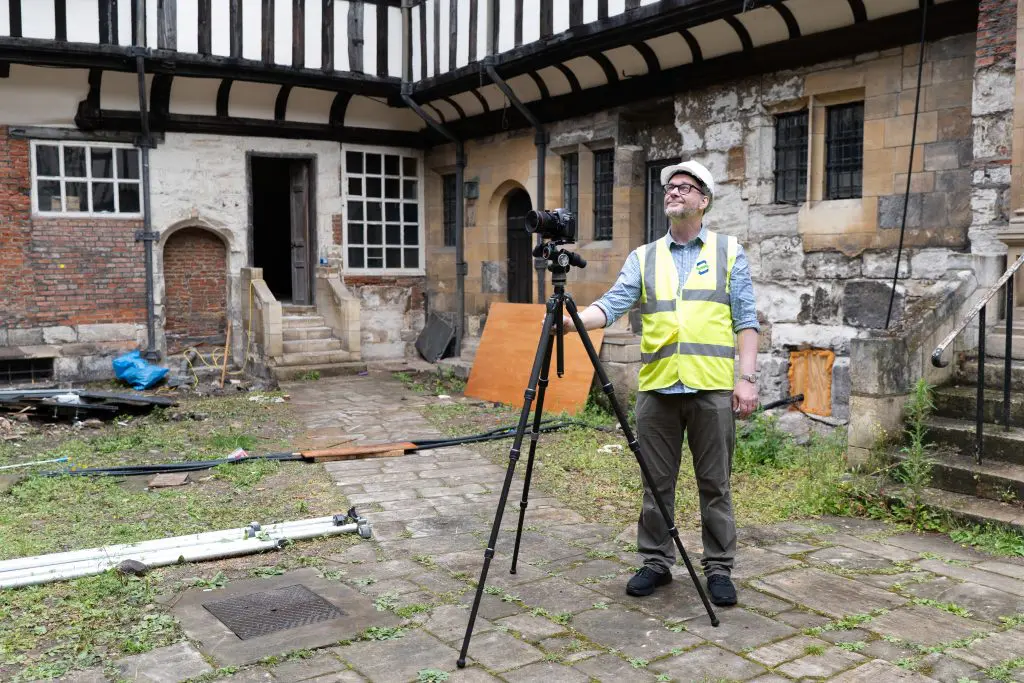
We welcomed architectural photographer, Andy Marshall, to St William’s College.
We have commissioned Andy to document this project as it progresses, giving you a glimpse behind the scenes. Alongside, Andy’s photography, York Independent Life will also be sharing more details as work unfolds on this 550-year-old building. Keep and eye on our social media channels and this page for regular updates.
Tuesday 26 May 2026
We are pleased to announce that work to restore the Grade I listed, St William’s College, will commence in early June.
The striking timber framed building is one of the finest surviving examples of a 15th‑century clerical college in England. Founded for the priests of St William’s chantry in 1456, it forms a significant part of York’s historic landscape and has a religious heritage closely intertwined with the life of York Minster.
The restoration and sensitive adaptation of St William’s College is a key milestone within York Minster’s Precinct Neighbourhood Plan, adopted in 2022. This important historic building has been underused for several years. The proposed restoration will give it a new, appropriate purpose. By bringing the building back into active use, the project will help protect its heritage, ensure it is properly cared for, and secure its future through ongoing use and maintenance.
The project includes the introduction of level access, a new lift, and changes to the courtyard to improve accessibility. Alongside this, the scheme reflects the Minster’s wider commitment to sustainability, balancing the building’s fragile historic fabric with measures to support energy efficiency and environmental responsibility.
Keep an eye on this page as we bring you updates as the works progress through the year.
Meet a Glazier
York Minster is home to one of the most significant collections of stained glass in the country. Behind every panel is the dedicated team at The York Glaziers Trust – Britain’s oldest and largest stained glass conservation studio – who work tirelessly to care for and preserve this magnificent collection.
We sat down with Susanna, one of the Conservators at The York Glaziers Trust, to chat about her role and find out how the team looks after such a precious part of York Minster’s heritage.
Can you tell us about your role at The York Glaziers Trust and how you got into it?
“I am a Stained Glass Conservator at The York Glaziers Trust (YGT). After completing my MA in Stained Glass Conservation and Heritage Management at the University of York, I was offered a position at the YGT as a Trainee Conservator in January 2023, and have since progressed to the position of Junior Conservator and subsequently to my current role as Conservator.
In addition to my conservation work, I run the YGT’s social media and am a member of our teaching team, which provides hands-on conservation training for the University of York’s MA programme.”
What projects are you currently working on?
“On the conservation bench at the moment, we have the exquisite South Transept lancet windows created by renowned York-based glass painter William Peckitt (1731-1795). These windows date to the late eighteenth century, and the quality of the craftsmanship is remarkable. It has been such a joy to see them up close, as the detail can so often be lost from ground level. The glass has been heavily broken in many places (a rogue pigeon was involved in one particularly unfortunate incident!), and the windows have been exposed to the extreme heating and cooling cycles typically experienced by south-facing windows. However, we are in the fortunate position to be able to rectify these issues with the help of conservation-grade adhesives and the provision of a bespoke environmental protective glazing system.
 “Also in development is the conservation methodology for York Minster’s beloved Rose Window, which suffered catastrophic heat damage during the 1984 fire in the South Transept but was saved thanks to the timely and innovative intervention of our predecessors at the YGT. We are looking forward to revisiting this window next year, both to see how the conservation programme of the 1980s has fared, and to ensure the window’s continued survival for generations to come. This work will also coincide with our 60th anniversary as a charitable trust, so it is a particularly exciting time to be a member of the YGT team!”
What’s your favourite piece you’ve ever worked on?
“As a conservator, it is so difficult to choose a favourite project. However, I think the window that has stuck with me the most is York Minster’s window S5 (c.1390), which is in the South Choir Clerestory. This was the first conservation project that I worked on from initial removal and condition assessment, through the conservation process, and finally to the reinstallation of the conserved glass and its new protective glazing system. It was hugely rewarding witnessing the process it is entirety, and contributing to the upkeep of this beautiful and significant window. Plus, during this project I rapidly gained a head for heights, which has proven essential for working on the Minster scaffold!”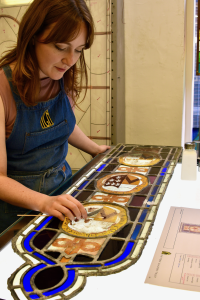
What has surprised you about working at The York Glaziers Trust and on York Minster’s Stained Glass?
“I think what has surprised me the most is how rapidly our studio has changed, even within the short space of time that I have worked as a conservator. Over the past three years, so many of our working methodologies, studio spaces, and approaches to conservation have evolved in response to changing technologies. For example, last year our main studio on Deangate finally got its own goods lift, after 110 years of carrying stained glass panels up and down a spiral staircase!
“We currently operate at the forefront of conservation best practice and as a team we are encouraged to be thinking regularly about how best to improve our skills and techniques. New avenues for templating, scanning, digitisation, and documentation are presenting innovative solutions to our day-to-day conservation problems. Our pioneering use of new materials, such as UV-IR glass for state-of-the-art protective glazing, reminds me that approaches to conservation are never ‘finished’; there is always room for improvement, and there is always scope for innovation for those with the imagination to think outside the box. We are very fortunate to enjoy a close working relationship with the Minster’s Centre for Excellence, who are equally proactive in utilising emerging technologies to support traditional craft skills and ensure that heritage conservation remains viable, dynamic and responsive.”
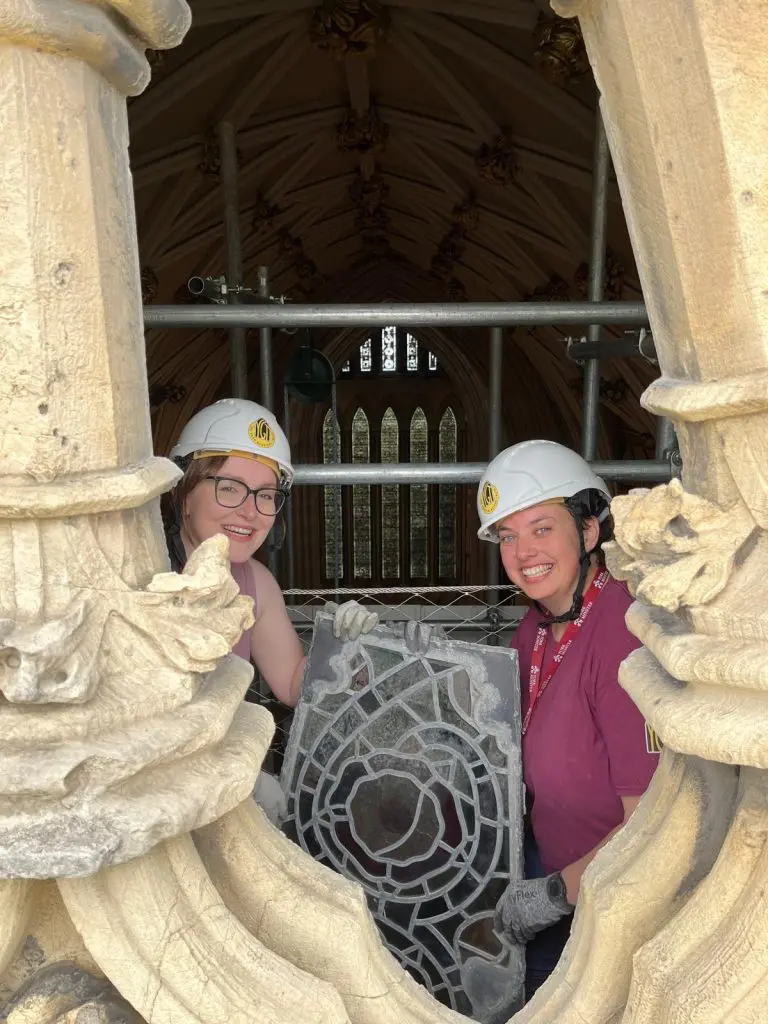
Kings and Queens of Stonemasonry
York Minster is adorned with intricately carved grotesques, decorative stone figures that embellish the building’s exterior. As part of the conservation project to restore the South Quire Aisle, new grotesques have been commissioned, and our team of Stonemasons are hard at work bringing them to life.
The new carvings depict Anglo‑Saxon kings and queens: King Athelstan, Æthelflæd, Lady of the Mercians, and Saint Edmund, plus an extra special feature. These hand-carved figures are a testament to the skill and dedication of our team of Stonemasons.
Take a closer look at each figure and discover more about the carving process!
Athelstan – Created by Richard Bossons
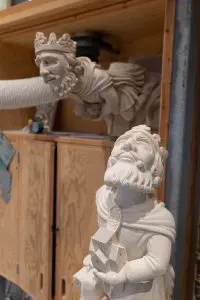
The first of the grotesques to be commissioned depicts Athelstan, the first king of all England.
This detailed carving was created by our Experienced Stonemason, Richard. Of the three grotesques created as part of this project, this one is now complete. It will remain in the workshop and, once the scaffolding on the Minster has been adjusted, it will then be carefully lifted into place on to a pinnacle on the South Quire Aisle.
This grotesque was commissioned and funded by the King Athelstan Memorial Foundation.
Æthelflæd, Lady of the Mercians – Created by Rita Dawe
 Accompanying Athelstan on this pinnacle will be his formidable aunt, Æthelflæd, Lady of the Mercians.
This grotesque is being created by Experienced Stonemason Rita, who is currently in the process of sculpting a clay model of this figure. Once complete, the clay model will be 3D scanned and printed. Rita will then use this printed model as a solid reference from which to carve the stone grotesque.
This process is just another example of how our heritage craftspeople are blending traditional skills passed down through generations with the latest in digital technologies and innovations.
*Update May 2026: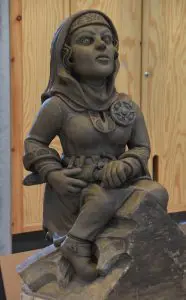
Rita has now completed the intricate details of this grotesque, bringing Æthelflæd to life with depth, character, and human touch. The model is now ready for 3D scanning, an important step that will guide the final carving in stone.
Saint Edmund & the Wolf – Created by Harriet Pace
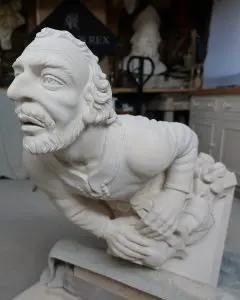
The third grotesque in the trio depicts Saint Edmund and the Wolf. Edmund, King of East Anglia, was killed by Viking raiders after refusing to renounce his faith. He was tied to a tree, whipped, shot with arrows, and later beheaded. His head was eventually found being guarded by a wolf.
Experienced Stonemason Harriet has completed her clay sculpture of this figure, and Luke, our Digital Surveyor, has 3D scanned it ready for printing. The next stage is to begin carving the detailed design in stone.
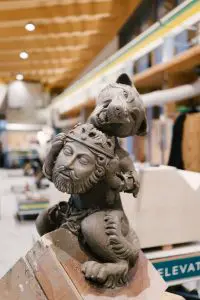
John David, Master Mason Emeritus – Created by Martin Coward
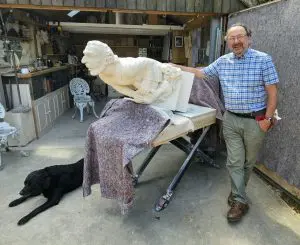
The fourth and final figure that will be adorning this pinnacle is none other than our very own John David, Master Mason Emeritus – a true King of Stonemasonry!
Stone Carver, Martin Coward, has created an incredible likeness of John (and his faithful dog Poppy!) to join these grotesques, immortalising both him and his dedication to the Minster in stone. After nearly 50 years spent caring for and preserving this iconic cathedral, there is no one more deserving of such an honour.
Discover more about our current conservation projects and get to know the teams behind the works.
Into the Quire: Building an Accessible Minster
“For he is our peace; in his flesh he has made both groups into one and has broken down the dividing wall, that is, the hostility between us.” – Ephesians 2.14
The creation of the new ramp is made possible through the generosity of the principal donor, the Friends of York Minster, as well as the Mark Benevolent Fund and Benefact Trust.
18 May 2026
An outstanding achievement!
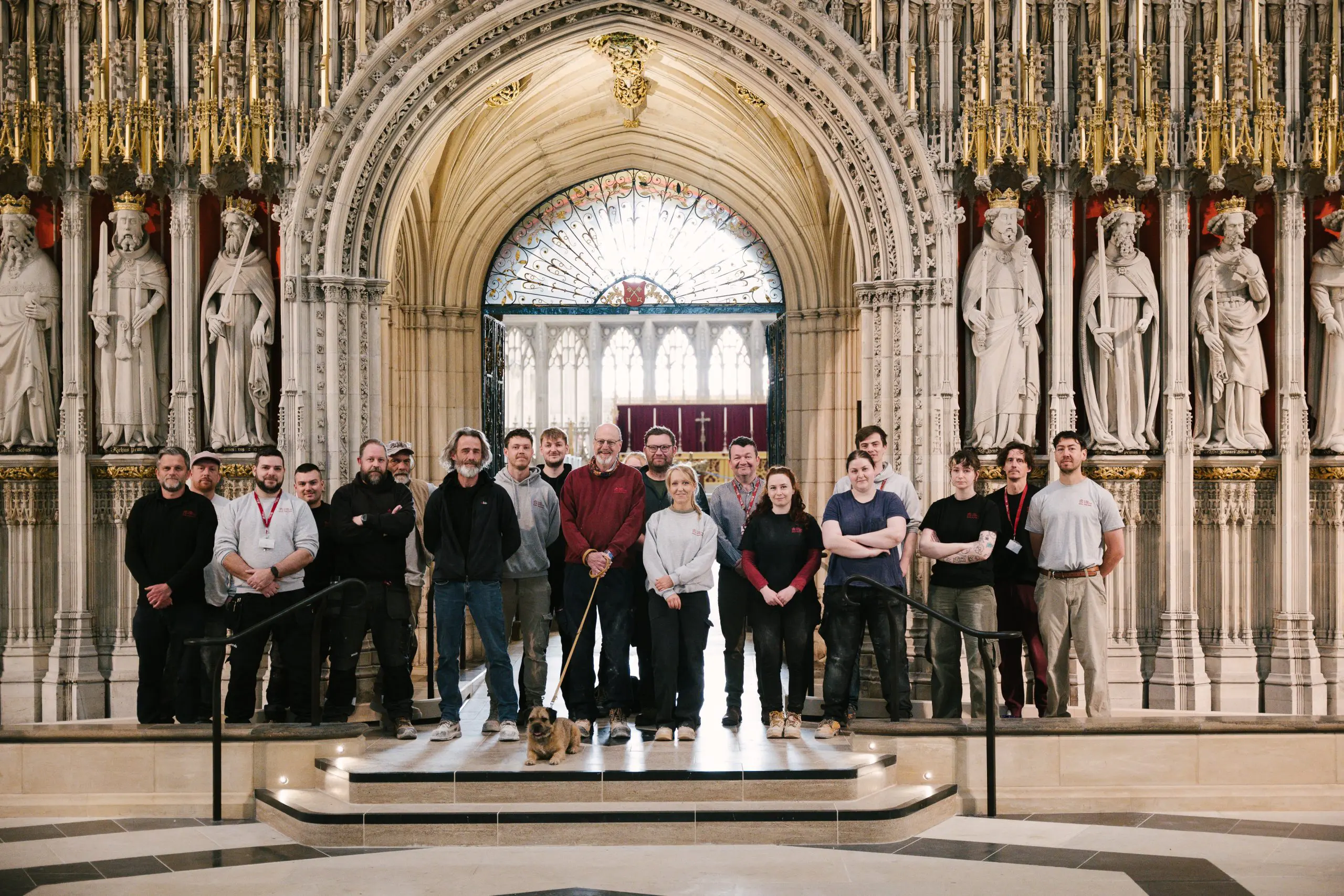
After five months of dedicated work, the new Quire ramp is now complete and fully open for use. This important addition creates improved access to the Quire at York Minster, welcoming more people than ever before and ensuring a more inclusive experience for all who visit.
The elegance and craftsmanship of the ramp stand as a testament to the exceptional skill and care of our expert team. Their collaboration has resulted not only in a beautifully designed structure that complements the Minster’s historic surroundings, but also in a meaningful and lasting legacy within this remarkable building.
This project reflects our continued commitment to accessibility, heritage, and excellence, ensuring that York Minster can be enjoyed by everyone, both now and for generations to come.
16 April 2026
At York Minster, heritage craftsmanship and cutting‑edge technology are working hand in hand as we continue shaping the new Quire Ramp. The first stones have been laid, and the project is on track to be completed early this summer.
Our team of expert craftspeople are empowered by advanced computer‑aided stone‑cutting technologies, including our new multi‑axis stone‑cutting saws. By blending centuries‑old stonemasonry skills with modern innovation, we are able to honour the Minster’s heritage while delivering this transformational accessibility project efficiently and sensitively.
Make sure to come back when the works have been complete, and to our official opening event that will take place during a service of Evensong with the Archbishop of York in June.
18 February 2026
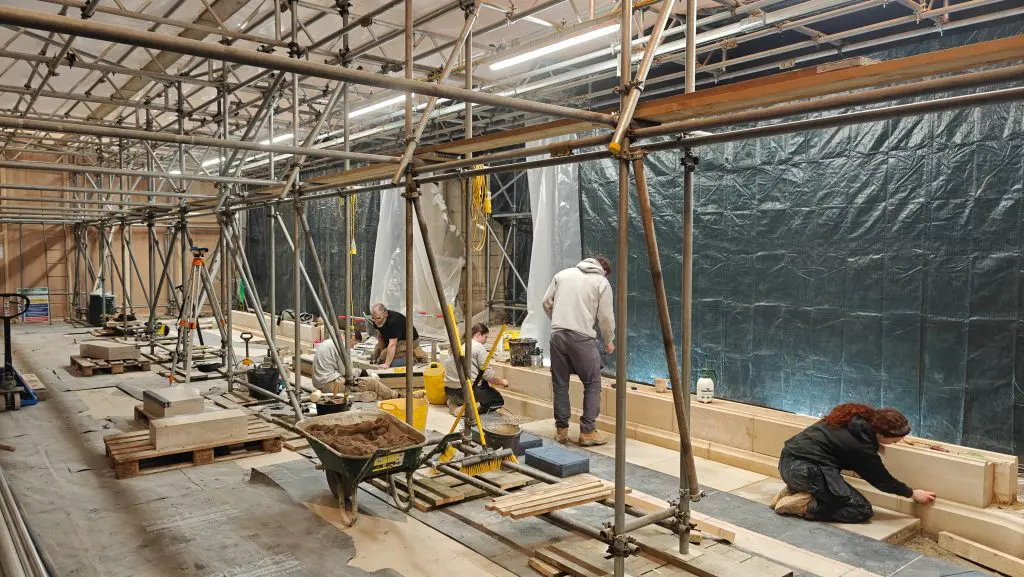
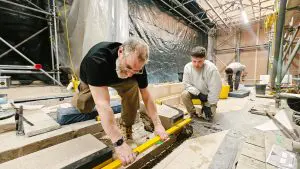
With the noisiest and most challenging aspects of the building work complete, the team have made headway on the most exciting part of the project.
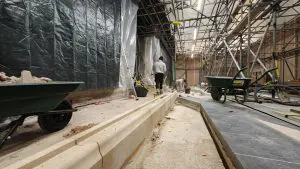
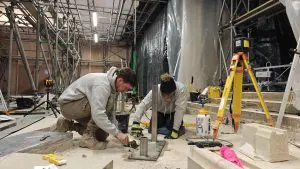
The large flagstones have been lifted out of place and work can now begin over the waffle floor – the lightweight flooring that was installed during the late 1960s and early 1970s as part of the large restoration project to save the Central Tower from imminent collapse. The first stone blocks of the new Quire ramp have been laid and the team are in the process of fitting the new railings to the foundations of the waffle floor.
We are working hard to minimise disruption to our daily operations as a living church and a visitor attraction. York Minster remains open for services and sightseeing, with no areas of the building closed off to the public. The integration of technologies, including the use of digital designs and stone-machining, has been essential to keeping this project on track and reducing disruption for all who enjoy this building.

11 February 2026
Since announcing our Quire Ramp Project in January, we’ve heard a wide range of questions about the motivations behind a project of this scale, particularly “why now?”
To address these important conversations, we spoke with Canon Tim, who shed light on the historic, cultural and societal reasons why this new ramp is not only significant, but essential. From ensuring equitable access, to honouring heritage craftsmanship, to harnessing innovative technologies, this project represents a shift in how we care for, and open up, one of the world’s most magnificent cathedrals.
5 February 2026
It’s been three weeks since we started work on the latest project at York Minster to create a new accessible ramp into the Quire that is not only in-keeping with the fabric of this magnificent building but also improves access to one of the world’s most magnificent cathedrals.
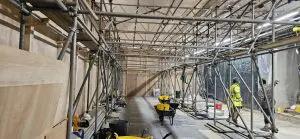
Our team have built the compound surrounding the works, and have completed one of the most challenging aspects of this project – lifting the flagstones from the floor. When you visit, you’ll be able to read more about the ongoing works and see our heritage crafters hard at work.

12 January 2026
In early 2026 we will begin the largest building project to take place inside York Minster in over a century.
We are committed to making this sacred place open, accessible and welcoming to everyone. Central to achieving that goal is a new a new permanent, beautifully designed accessible ramp into the Quire, the beating heart of worship at York Minster.
Hear from Dean Dominic on why these works are so important and what you can expect to see when you next visit the Minster.
Meet Our Master Mason Emeritus
For nearly five decades, York Minster has been cared for under the guidance of our Master Mason Emeritus, John David.
Responsible for the planning and design of the cathedral’s stonework, John is a true master of his craft. He is our longest-serving member of staff and continues to work to conserve a building he helped to repair 40 years ago, following the devastating fire of 1984 – during which he helped carry precious treasures away from the blaze and later worked tirelessly to restore it to its glory.
Hear from John as he shares his role in caring for York Minster and gives a first-hand account of the 1984 fire.
Meet A Stonemason
York Minster has been home to a team of stonemasons for more than 800 years.
The skills and techniques employed by the team have been passed down through the centuries as they continue to be responsible for the ongoing care and restoration of the cathedral and its surrounding precinct. Every stone is still cut by hand on site at the Minster using similar types of mallets and chisels as their medieval predecessors possessed.
It has never been more important that these ancient skills are sustained through continuous investment in the next generation of skilled cathedral stonemasons.
Hear from our stonemason, Freya, as she shares what it’s like to be part of the team shaping a lasting legacy at York Minster.
Meet the Gardeners
Our dedicated team of Gardeners diligently tend to York Minster’s seven hectares of green space throughout the year, ensuring every corner thrives in every season.
From Dean’s Park to Minster Gardens and College Green, these tranquil spaces offer a peaceful haven for both wildlife and people; a chance to pause and step away from the city’s busy rhythm. It’s always a joy to see visitors relaxing, exploring, and making the most of these beautiful places.
Find out what caring for these spaces means to the team on the ground.
Revealing medieval stained glass
We’re aware that the constant scaffolding on cathedrals has become a bit of a running joke (we needed 16 miles of it when we were working on the Great East Window!), so it’s worth celebrating when we get to take some down.
In January 2025, we are revealing the ‘S5’ window towards the east end of the cathedral. The recently conserved window is slightly unusual. It dates from the late 14th century and we think it can be attributed to John Berg, a rather mysterious figure from that time, but it also showcases repairs from the 1830s following a disastrous fire.
We spoke to Professor Sarah Brown, Director of York Glaziers Trust, to learn more about the window which is being revealed throughout the month as the team work to carefully remove the scaffolding that has allowed them to access this great treasure.
Caring for the Chapter House doors
When your doors are 700 years old, they need some tender loving care every now and again!
Our Research Coordinator, Dr Jennie England, explains what makes the Chapter House Doors so special and why you may see conservators during your visit.
Our Digital Surveyor, has been hard at work scanning these medieval doors. Luke will create a 3D digital model of the doors from the scans, using brand-new technology to hopefully bring new insights into these awesome ancient objects.
Stay up to date with York Minster
- Event alerts
- Seasonal services
- Behind the scenes features
- Latest Minster-inspired gifts