The Life of St William of York
You’re not alone if you’ve never heard of St William of York. Though little known today, he was an important figure in medieval England both during his lifetime and after his death.
Our Research Coordinator, Dr Jennie England, explores the turbulent and troubled life of a man who was so dedicated to our city, from his early life through to his controversial election as Archbishop in 1141, subsequent fall from grace, triumphant return and ultimate untimely death.
The Rise of William fitzHerbert
Very little is known about William fitzHerbert’s early life. Cousin to the King, William quickly rose through the ranks at court, eventually securing himself the position of Treasurer of York Minster and Archdeacon of the East Riding. His successful 30 years in this position would lead him to secure the position of Archbishop of York by 1141 though there were some challenges he faced along the way…
Fall from Power
William’s election as Archbishop of York was plagued by intense political tensions and religious controversy. England was in chaos; a civil war between King Stephen and Empress Matilda had torn the kingdom apart. Whilst religious reform was to instigate new challenges that William would struggle to combat…
Return, Death and Legacy
As tensions cooled in England as civil war was brought to a resolution, and after William had spent many years in exile from the city of York; he returned in 1154 once again as the Archbishop. But this was not to be for long…..
The life, death and legacy of St William of York is one full of contention, political intrigue, murder and mystery. He now lies at rest in the Crypt of York Minster, a site of pilgrimage still to this day.
You can explore further the story of St William of York through the objects that bring it to life in our current exhibition, St William of York: Life and Legacy, open now until January 2027 and entry is included with your sightseeing ticket.
Restoring St William’s College
Friday 26 June 2026
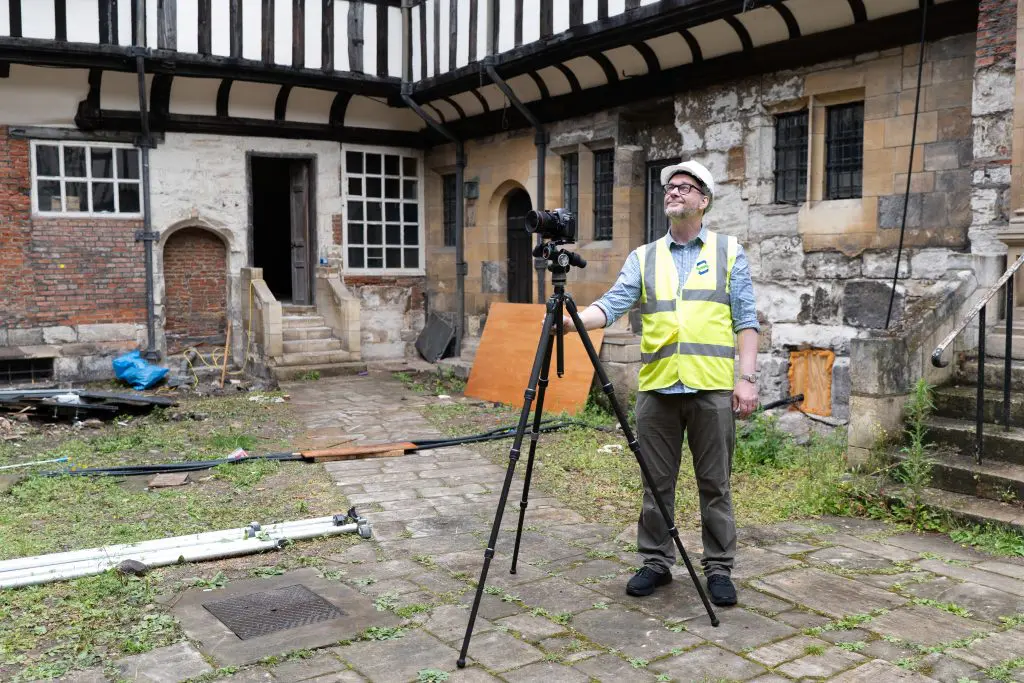
We welcomed architectural photographer, Andy Marshall, to St William’s College.
We have commissioned Andy to document this project as it progresses, giving you a glimpse behind the scenes. Alongside, Andy’s photography, York Independent Life will also be sharing more details as work unfolds on this 550-year-old building. Keep and eye on our social media channels and this page for regular updates.
Tuesday 26 May 2026
We are pleased to announce that work to restore the Grade I listed, St William’s College, will commence in early June.
The striking timber framed building is one of the finest surviving examples of a 15th‑century clerical college in England. Founded for the priests of St William’s chantry in 1456, it forms a significant part of York’s historic landscape and has a religious heritage closely intertwined with the life of York Minster.
The restoration and sensitive adaptation of St William’s College is a key milestone within York Minster’s Precinct Neighbourhood Plan, adopted in 2022. This important historic building has been underused for several years. The proposed restoration will give it a new, appropriate purpose. By bringing the building back into active use, the project will help protect its heritage, ensure it is properly cared for, and secure its future through ongoing use and maintenance.
The project includes the introduction of level access, a new lift, and changes to the courtyard to improve accessibility. Alongside this, the scheme reflects the Minster’s wider commitment to sustainability, balancing the building’s fragile historic fabric with measures to support energy efficiency and environmental responsibility.
Keep an eye on this page as we bring you updates as the works progress through the year.
Gathered in Unity: Honouring St William of York Together
“For William’s faithfulness to the call of God in times of joy and in times of trial. Lord accept our thanks and praise.” – Archbishop of York, Stephen Cottrell, and the Right Reverend Marcus Stock, Roman Catholic Bishop of Leeds.
These words were spoken in a shared prayer by the Archbishop of York and the Roman Catholic Bishop of Leeds, as we came together in collective worship to honour the 800th anniversary of the canonisation of St William of York. This commemorative Evensong brought together people from across traditions, united in remembrance, faith, and hope, as we reflected on the enduring significance and legacy of his life.
Twice Archbishop of York in the 12th century, St William of York was a figure who inspired devotion both in life and in death, as people travelled from across the country seeking help, hope and healing from his tomb.
Joined on this occasion by our friends and partners from the Roman Catholic Church, the commemoration served not only as a moment of historical reflection, but also as a living expression of Christian unity. It reminded us of the importance of coming together in shared worship, of listening to one another with openness and respect, and of continuing the work of building bridges between our churches.
Read Archbishop, Stephen Cottrell’s full sermon given at this service.
Unlocking St William’s Story: Meet The York Glaziers Trust
As part of our celebrations for the 800th anniversary of the canonisation of St William of York, we explore the legacy of craft that he inspired at York Minster. We took a closer look at the magnificent stained glass inside the cathedral and the remarkable conservation work that takes place behind the scenes.
In the final instalment of this three-part video series with The History Magpie, which explores the life and legacy of St William of York, we step inside the studio of the York Glaziers Trust – the oldest and largest stained‑glass conservation studio in Britain – for a rare behind‑the‑scenes look at their incredible work.
Having completed the restoration of the spectacular 95 panel St William Window, which takes pride of place along the Minster’s North Quire Aisle, the team were more than happy to show Charlie from The History Magpie, their current conservation project on the St Cuthbert Window and give him a glimpse into how they care for all 128 stained glass windows at York Minster.
Watch the final instalment below and discover more about the life and legacy of St William of York at York Minster throughout 2026.
Catch up with the first video in this series and find out more about York’s patron saint.
Unlocking St William’s Story: Inside the Stonemason’s Workshop
Eight centuries after the canonisation of St William of York, history returns to the heart of the Minster. For the first time in 500 years, fragments of St William’s shrine, once dismantled and hidden during the English Reformation, have come home.
We teamed up with social media influencer The History Magpie to explore the remarkable legacy of craft inspired by St William of York.
In the second video, Charlie was invited to York Minster’s Centre of Excellence for Heritage Craft Skills and Estate Management, to meet Stonemason Freya. She explains how this centuries‑old trade continues to thrive, using the skills and methods that would have been familiar to St William himself, while embracing modern techniques.
Discover how these centuries-old heritage crafts continue to thrive while embracing modern techniques, and how St William’s story still inspires the work of York Minster’s Stonemason team today.
Watch the next instalment for a sneak peak behind the scenes of the York Glaziers Trust.
Unlocking St William’s Story: Behind the Scenes with The History Magpie
How do you share the story of a 12th-century saint with a 21st-century audience? You bring in The History Magpie!
2026 marks the 800th anniversary of the canonisation of St William of York, a figure who inspired devotion both in life and in death, though not without a little turbulence along the way…
As part of our celebrations, we invited social media influencer Charlie Eve, also known as The History Magpie, to York Minster to help unlock the story of St William for a whole new audience. This collaboration helps us to amplify the presence of St William by sharing our patron saint’s story with a combined Instagram audience of more than 173,000 people – and that’s just on one platform!
In the first of this three‑part video series, Charlie, alongside Dr Jennie England Research Coordinator at York Minster, not only introduces us to St William of York, but also highlights the significance of the return of his shrine fragments, on loan from York Museums Trust. He also sheds light on the incredible legacy that this saint inspired.
Watch the next instalment of this video series here: Unlocking St William’s Story: Inside the Stonemason’s Workshop.
Into the Quire: Building an Accessible Minster
“For he is our peace; in his flesh he has made both groups into one and has broken down the dividing wall, that is, the hostility between us.” – Ephesians 2.14
The creation of the new ramp is made possible through the generosity of the principal donor, the Friends of York Minster, as well as the Mark Benevolent Fund and Benefact Trust.
18 May 2026
An outstanding achievement!
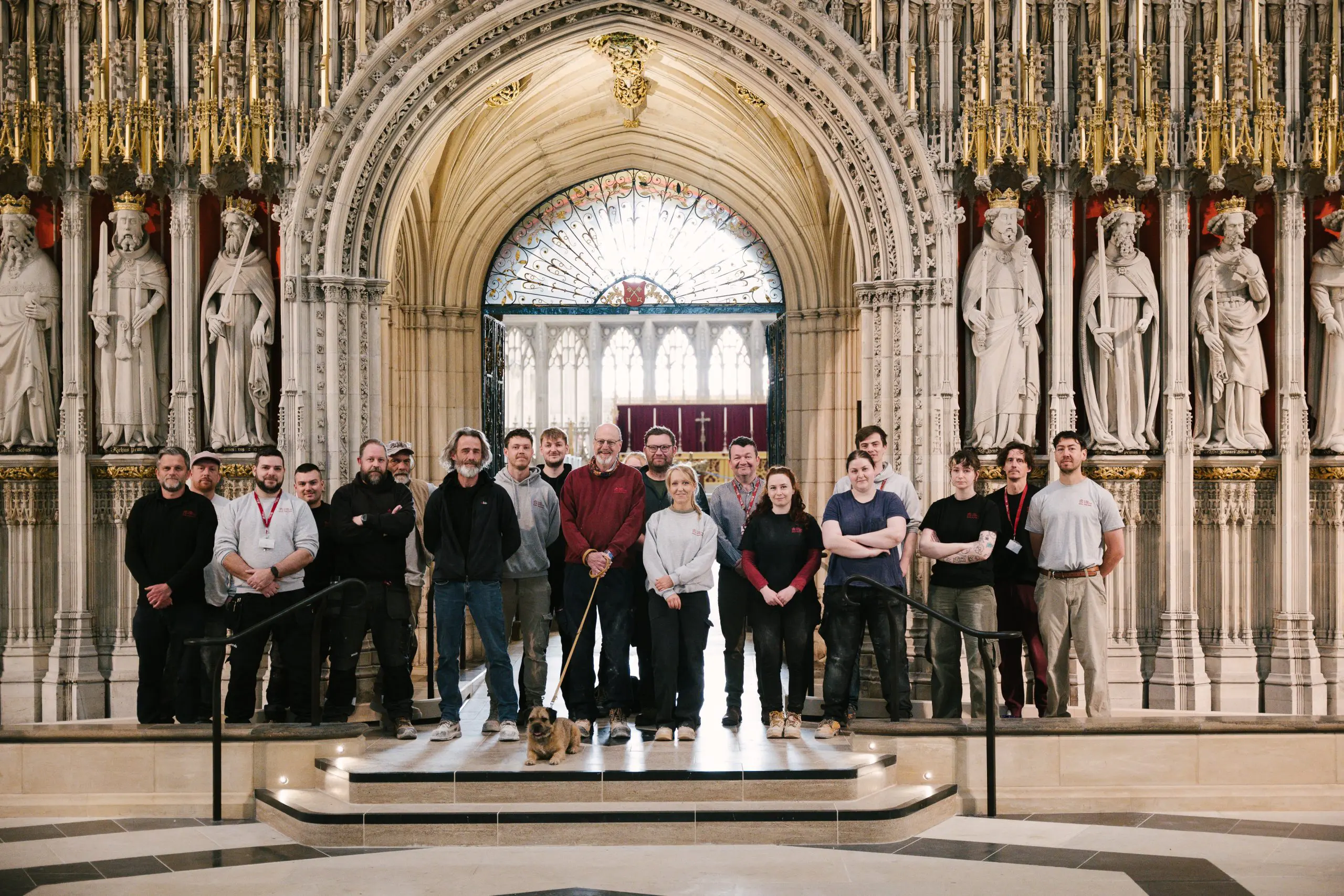
After five months of dedicated work, the new Quire ramp is now complete and fully open for use. This important addition creates improved access to the Quire at York Minster, welcoming more people than ever before and ensuring a more inclusive experience for all who visit.
The elegance and craftsmanship of the ramp stand as a testament to the exceptional skill and care of our expert team. Their collaboration has resulted not only in a beautifully designed structure that complements the Minster’s historic surroundings, but also in a meaningful and lasting legacy within this remarkable building.
This project reflects our continued commitment to accessibility, heritage, and excellence, ensuring that York Minster can be enjoyed by everyone, both now and for generations to come.
16 April 2026
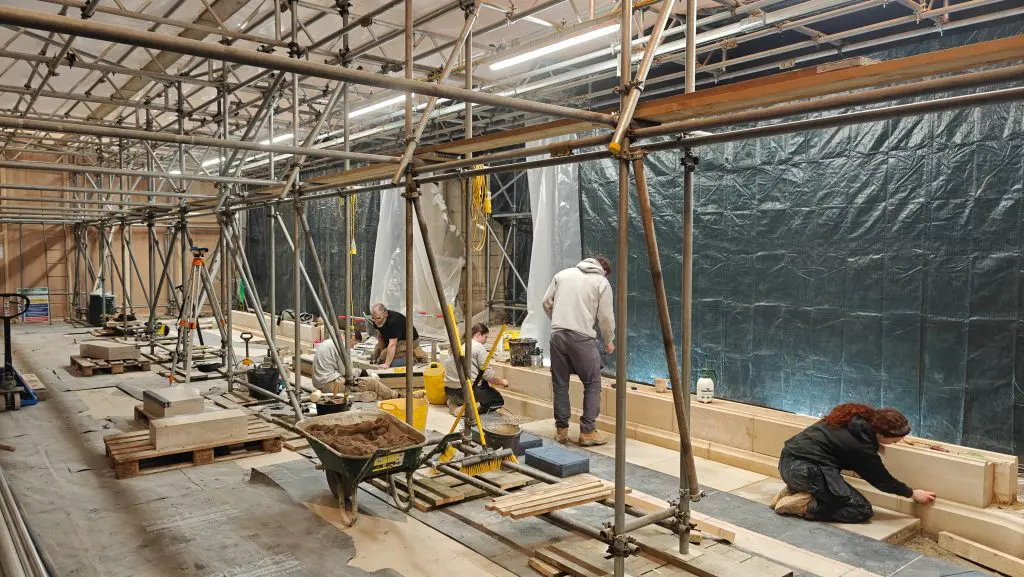
At York Minster, heritage craftsmanship and cutting‑edge technology are working hand in hand as we continue shaping the new Quire Ramp. The first stones have been laid, and the project is on track to be completed early this summer.
Our team of expert craftspeople are empowered by advanced computer‑aided stone‑cutting technologies, including our new multi‑axis stone‑cutting saws. By blending centuries‑old stonemasonry skills with modern innovation, we are able to honour the Minster’s heritage while delivering this transformational accessibility project efficiently and sensitively.
Make sure to come back when the works have been complete, and to our official opening event that will take place during a service of Evensong with the Archbishop of York in June.
18 February 2026
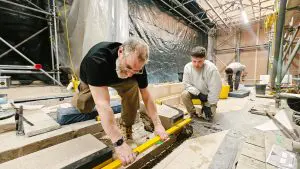
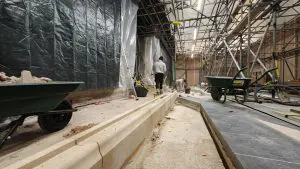
With the noisiest and most challenging aspects of the building work complete, the team have made headway on the most exciting part of the project.
The large flagstones have been lifted out of place and work can now begin over the waffle floor – the lightweight flooring that was installed during the late 1960s and early 1970s as part of the large restoration project to save the Central Tower from imminent collapse. The first stone blocks of the new Quire ramp have been laid and the team are in the process of fitting the new railings to the foundations of the waffle floor.
We are working hard to minimise disruption to our daily operations as a living church and a visitor attraction. York Minster remains open for services and sightseeing, with no areas of the building closed off to the public. The integration of technologies, including the use of digital designs and stone-machining, has been essential to keeping this project on track and reducing disruption for all who enjoy this building.
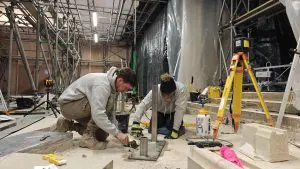

11 February 2026
Since announcing our Quire Ramp Project in January, we’ve heard a wide range of questions about the motivations behind a project of this scale, particularly “why now?”
To address these important conversations, we spoke with Canon Tim, who shed light on the historic, cultural and societal reasons why this new ramp is not only significant, but essential. From ensuring equitable access, to honouring heritage craftsmanship, to harnessing innovative technologies, this project represents a shift in how we care for, and open up, one of the world’s most magnificent cathedrals.
5 February 2026
It’s been three weeks since we started work on the latest project at York Minster to create a new accessible ramp into the Quire that is not only in-keeping with the fabric of this magnificent building but also improves access to one of the world’s most magnificent cathedrals.
Our team have built the compound surrounding the works, and have completed one of the most challenging aspects of this project – lifting the flagstones from the floor. When you visit, you’ll be able to read more about the ongoing works and see our heritage crafters hard at work.

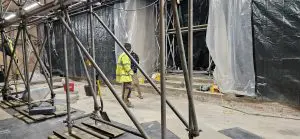
12 January 2026
In early 2026 we will begin the largest building project to take place inside York Minster in over a century.
We are committed to making this sacred place open, accessible and welcoming to everyone. Central to achieving that goal is a new a new permanent, beautifully designed accessible ramp into the Quire, the beating heart of worship at York Minster.
Hear from Dean Dominic on why these works are so important and what you can expect to see when you next visit the Minster.
The Miracles of St William of York
Following the death of William fitzHerbert Archbishop of York, in 1154 he was laid to rest inside York Minster cathedral. Within a few months, miracles were reported at his tomb by those who had come to honour him and pay their respects. In recognition of the miracles reported, William was canonised by Pope Honorius III in 1226.
Across 95 panels of intricately detailed depictions, the St William Window in York Minster tells the story of William and the miracles attributed to him, in what was one of the largest narratives in stained glass ever made in Medieval England.
The First Miracle
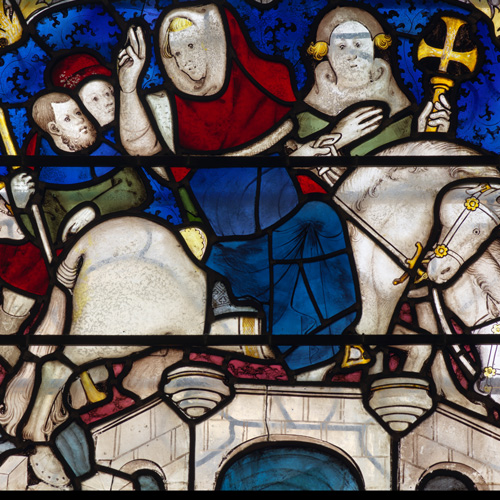
William was beloved by the people of York, and his reinstatement to the See of Archbishop in 1154 and return to the city was met with jubilant crowds. So many people came out to cheer and celebrate his return that as he crossed the river the weight of the crowds caused the timbers of Ouse Bridge to give way and collapse.
Large numbers of people were thrown into the river and were at risk of drowning. William, seeing the carnage, prayed to God for those in peril to be saved and he made the sign of the cross over them. All were saved.
This is considered William’s first miracle.
Miracles at the Tomb
Many miracles were reported at the tomb of St William of York where people from all walks of life, rich and poor, young and old, male and female travelled in pilgrimage to honour William and to seek help.
One miracle depicted in the St William Window tells of a woman who inadvertently swallowed a frog and then journeyed to St William’s tomb with her husband where she was cured by throwing it up.
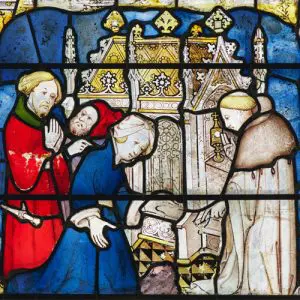
In 1223 a sweet-smelling oil flowed from William’s tomb. The flowing of holy oil was widely regarded as indicating sanctity and, though considered a commonplace saintly phenomenon William is the first English saint recorded to have performed this miracle.
There are numerous accounts of witnessed miracles at the tomb of St William from people who travelled from across the globe seeking help and healing. We can still relate to their concerns today: physical and mental illness, poverty, social injustice, concern for their loved ones, loss and grief.
Miracles to Protect from Danger
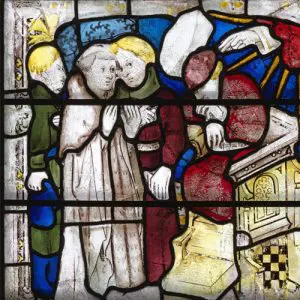
There are numerous reports of St William’s intervention to protect people from danger, from the King to a servant, all attribute their lives being protected to William of York.
Edward I, having accepted an invitation to attend the translation of the relics of Saint William, later has a near-fatal fall from a mountain whilst in Wales. The King was unharmed and he later ascribed his deliverance to have been from St William of York as he had promised to honour him.
A servant to one of the canons at York Minster fell asleep during Matins, whilst resting against the pulpit. A stone column of considerable weight fell on his head. Miraculously the servant is unharmed and he thanked the grace of St William and walked away.
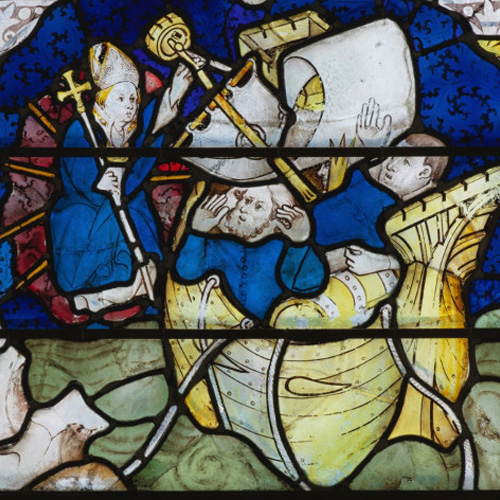
Sailors who were in danger of being shipwrecked, reported that St William appeared in a vision and their ship, which had suffered a broken mast in a storm was protected from running aground on the rocky shore.
As we celebrate 800 years since the canonisation of William as a saint, take the rare opportunity to see pieces from his medieval Nave shrine returned to York Minster for the first time in almost 500 years. Explore his story and see precious artefacts which narrate the life of a man who devoted himself to our city and cathedral.
Plan a visit to our new exhibition.
All the images included above are panels from the St William Window at York Minster. Panel images above:
- ‘9c The miracle of Ouse Bridge’
- ’17c The woman is cured at the tomb’
- ’20d A servant is hit on the head by a stone’
- ’16e Saint William saves a ship with a broken mast’.
To explore further head to the York Glazier’s Trust Stained Glass Navigator to look closely at each panel and find out more of the miracles attributed to St William.
Stay up to date with York Minster
- Event alerts
- Seasonal services
- Behind the scenes features
- Latest Minster-inspired gifts