Who am I, O Lord God, and what is my house, that you have brought me thus far?”
May I speak in the name of the living God, who is our creator, sustainer and redeemer. Amen.
There are evenings in the life of this Minster when thanksgiving and farewell sit very close together.
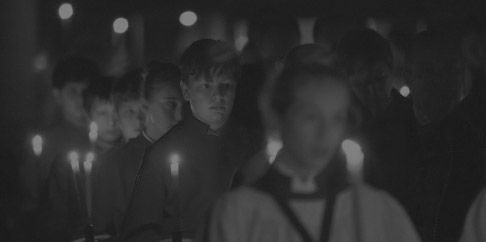
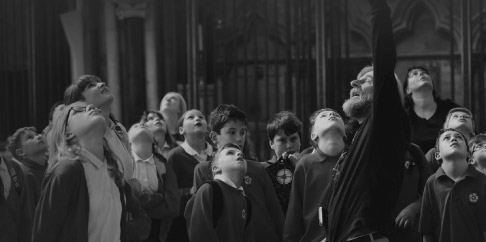
Tonight we are giving thanks for choristers who are being read out: for the years they have given, the music they have offered, the discipline they have learned, the friendships they have formed, and the prayer they have carried on behalf of us all. We are also giving thanks for their families: for the journeys, the waiting, the encouragement, the rearranged lives, the quiet sacrifices, and the many unseen acts of love that have made this visible offering possible.
And into this moment of thanksgiving and farewell comes David’s prayer:
“Who am I, O Lord God, and what is my house, that you have brought me thus far?”
It is a beautiful question, because it is so honest. David has just received God’s promise. He had wanted to build God a house, a temple, a permanent dwelling. But God turns the gift around. David says, “I will build you a house.” God says, “No, David. I will build you a house.” David wants to offer something to God and discovers that God has already been offering everything to him.
That is often how grace works. We set out thinking we are the ones giving, building, serving, achieving, and then, if we are attentive, we realise that beneath all our effort there has been gift all along. God has been faithful long before we managed to be faithful ourselves. And grace is a word a cathedral ought never to forget. Because this place is full of human offering. The stone, the glass, the daily pattern of prayer, the music: all of it is the work of many hands and many hearts. And yet none of it begins with us. It begins with God. It begins with the grace that calls us, gathers us, and gives us something to offer in return.
So, David does not stand before God saying, “Look what I have made.” He sits before the Lord and says, “Who am I, that you have brought me thus far?”
This feels such a very fitting prayer for tonight. For our choristers, it speaks of the mystery of gift. Music is never only performance. It is service. It is attention. It is learning to offer our whole selves, breath, body, discipline, imagination, and courage to something larger than the self. A voice is not simply an instrument to be trained. It is a gift to be received, nurtured, and offered.
And perhaps all of us need to remember that. Whatever gifts we are blessed to carry, they are not possessions to guard, but gifts entrusted to us for the blessing of others. We do not own grace. We receive it, and then we share it.
But turning towards the Gospel, we find ourselves in a very different kind of moment.
Jesus draws near to Jerusalem and weeps over it. He does not stand at a distance in cold judgement. He weeps. “If you, even you, had only recognised on this day the things that make for peace.”
This is a deeply tender scene. It shows us that the judgement of Christ is never detached from love. Jesus weeps because the city is beloved. His tears are not the opposite of mercy; they are mercy made visible.
Then he enters the temple and drives out those who have turned the house of prayer into a place of transaction. And when he teaches there, the authorities ask him, “By what authority are you doing these things?”
It is an understandable question in one sense. Institutions need order. Communities need responsibility. Sacred places need care. But the sadness of the moment is that those asking the question cannot quite recognise what is happening before them. They are trying to manage the situation, but Jesus is inviting them to attend more deeply.
And it is here where the Gospel touches us too.
It is possible for any community, including a cathedral, to become so busy maintaining what matters that we sometimes miss why it matters. We can become so fixated on the pattern, the diary, the structure, the tradition, the next thing to be done, that we forget to pause and recognise the grace at the heart of it all.
This is said not to condemn us. It is said because it is profoundly human. It happens in families. It happens in schools. It happens in choirs. It happens in cathedrals. We become busy with the things we love, and sometimes the busyness makes it harder to see the love itself.
So, tonight’s readings place before us two invitations.
David invites us into gratitude: “Who am I, that you have brought me thus far?”
Jesus invites us into recognition: “If only you had recognised the things that make for peace.”
Gratitude and recognition. These are quiet words, but they can transform how we live. Gratitude reminds us that we are not self-made. Recognition helps us notice where God is present: in beauty, yes; in music, yes; in prayer and scripture, yes; but also in tears, in change, in endings, in the people who carry so much unseen.
So to our leaving choristers, perhaps this is the blessing and the charge tonight. Take with you not only your musical skill, your memories, your confidence; not only your friendships, precious as all these are. Take with you the habit of grace.
Remember that your voice matters. Not just your singing voice, but your complete voice, your kind voice, your courageous voice, your compassionate voice. Use it well. Use your voice for the things that make for peace. Use it to encourage. Use it to include. Use it to bring beauty into places that need hope.
And when life becomes demanding, as it surely will, remember David’s question: “Who am I, that you have brought me thus far?” It is not a question of low self-worth. It is a question of wonder. It is the prayer of someone who knows that life is gift, and that every future begins in grace.
And to our Chorister families, thank you. Cathedrals can sometimes speak as though worship simply happens. It does not. It is carried by sacrifice, patience, encouragement, and love. Your support has been a vital part of the music. Your faithfulness has been part of the offering. Your hidden labour has helped make prayer audible in this place.
And to all of us who remain, the invitation is simple, but not small. Let us be a community that remembers grace. Let us recognise the things that make for peace. Let us allow Christ to keep teaching us what a house of prayer is for: not simply beauty for its own sake, but beauty in the service of love; not tradition as something to possess, but tradition as something to receive and pass on; not excellence as pride, but excellence as offering.
Tonight, as voices move on and this community gives thanks, may we remember. We are not here to build a house grand enough to contain God. We are here because God, in mercy, has made a home among us.
So may we say with David, in humility and wonder, “Who are we, O Lord God, that you have brought us thus far?”
And may we recognise, in the tears of Christ, not only warning, but love: the love that calls us, again and again, to the things that make for peace.
Amen.
Stay up to date with York Minster
- Event alerts
- Seasonal services
- Behind the scenes features
- Latest Minster-inspired gifts